
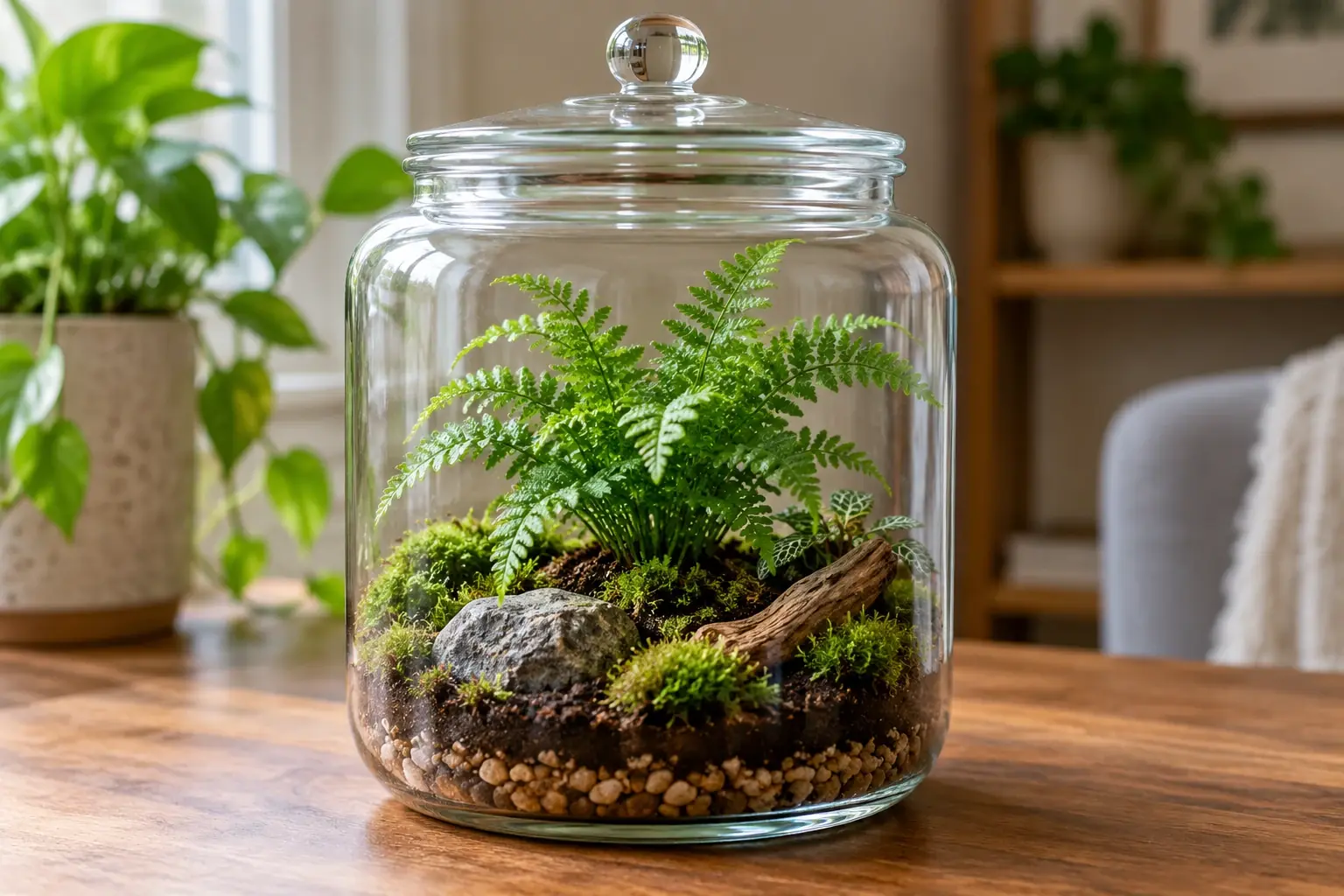
If you’re learning how to make a fern terrarium, start with a small fern that likes humidity, a clear container, a light growing mix, and careful watering. Ferns can do very well in closed or mostly closed terrariums because the glass helps hold moisture around the plant.
For a first build, choose a compact fern instead of a large houseplant fern. Maidenhair, table fern, rabbit’s foot fern, and compact forms of lemon button fern all work, depending on the container size and how much pruning you are willing to do.
The goal is simple: keep the root zone evenly moist without turning the terrarium into a swamp. Give the fern bright indirect light, enough room to grow, and only as much water as it needs.
Fern Terrarium Supplies at a Glance
| Item | Need It? | Why |
|---|---|---|
| Clear container with lid | Yes | Holds humidity and lets in light |
| Small healthy fern | Yes | The main plant; choose one that fits the container |
| Light potting or terrarium mix | Yes | Keeps roots moist without becoming a heavy muddy mass |
| Small mister or water dropper | Helpful | Lets you add very small amounts of water |
| Tweezers, chopsticks, or spoon | Helpful | Makes planting easier in a deep or narrow container |
| Moss, stone, or simple hardscape | Optional | Adds texture without crowding the fern |
| Gravel or charcoal | Optional | May be used in some builds, but careful watering matters more |
Which Ferns Can Grow in a Terrarium?
The best terrarium ferns are naturally compact, tolerate high humidity, and can handle the steady moisture found in a closed container. Not every fern sold as a houseplant stays small enough for a jar.
Iowa State University Extension lists several ferns for terrariums, including maidenhair fern, table fern, rabbit’s foot fern, holly fern, bird’s nest fern, and cloak fern. The important part is matching the mature size to the container.
| Fern | Why It Can Work | What to Watch |
|---|---|---|
| Maidenhair fern | Likes moisture and humidity and is specifically recommended for terrariums | Can be delicate and may reach 1 to 2 feet depending on the variety |
| Table fern | Listed as a mid-size terrarium plant by Iowa State | Needs enough room for spreading fronds |
| Rabbit’s foot fern | Can handle humid terrarium conditions and adds a different texture | Better in a container with enough room for its growth habit |
| Lemon button fern | NC State lists its species for terrariums and bottle gardens | Choose a compact plant and prune before it crowds the glass |
For a small beginner terrarium, choose the smallest healthy fern you can find and check its mature size before planting. A plant that looks tiny in a two-inch nursery pot can still become much too large for a jar.
Should a Fern Terrarium Be Open or Closed?
A closed or mostly closed terrarium is usually the easier choice for humidity-loving ferns. Penn State Extension describes ferns as natural choices for closed terrariums because they like moisture and can grow well in dimmer, humid conditions.
A lid slows water loss and keeps the air around the fronds more humid. That can be especially useful for delicate ferns that struggle in the dry air of a heated or air-conditioned room.
An open fern terrarium can still work, but the growing mix dries faster, and the humidity around the leaves is lower. You will need to watch the plant more closely and add water more often.
Whichever style you choose, keep the container out of direct sun. Bright indirect light is the safer option because sunlight through glass can quickly overheat a terrarium.
How to Make a Fern Terrarium Step by Step
1. Choose the Fern Before the Container
Start with the plant. Look for a small, healthy fern with no obvious pests, yellowing, or damaged roots.
Check the mature size and growth habit. If the fern is already almost as tall as the container, it will not stay comfortable for long. Leave room above and around the fronds so you can prune and maintain the plant later.
2. Clean the Container
Wash the glass or plastic container with warm, soapy water, rinse it well, and let it dry before planting.
A wide opening makes the job much easier. A narrow-neck jar can work, but you may need long tweezers, chopsticks, or a spoon to reach the planting area.
3. Add a Light Growing Mix
Use a light potting or terrarium mix that can stay moist without becoming dense and muddy. University of Vermont Extension recommends light potting soil containing perlite and/or vermiculite for terrariums.
Add enough mix to hold the fern’s roots securely. If you use a decorative gravel layer or charcoal, keep the build simple and remember that a jar still has no drainage hole. Water carefully to keep the root zone from staying flooded.
4. Prepare the Fern
Remove the fern from its nursery pot and gently loosen the outside of the root ball. Remove dead or badly damaged fronds before planting so you don’t seal decaying material inside the terrarium.
If the plant is too large and the species grows in a clump, you may be able to divide it into a smaller piece. Do not tear apart a healthy fern just to make it fit if you are unsure how that species grows.
5. Plant the Fern With Room to Grow
Make a hole in the growing mix, set the fern in place, and gently firm the soil around the roots. Keep the crown and base of the fronds at about the same level they were growing in the nursery pot.
Do not press the fern against the glass. Leave open space around the fronds so they can expand without immediately touching the sides.
6. Add Moss or Small Companions Only If They Fit
A fern can be the only main plant in a terrarium. You do not need to fill every empty spot.
If you add moss or another plant, choose something that wants similar moisture, humidity, and light. A closed fern terrarium is not a good place for a dry-loving succulent.
7. Water Lightly and Close the Terrarium
Add a small amount of water so the growing mix is evenly damp, not saturated. A terrarium without a drainage hole has nowhere for extra water to go.
After the glass and foliage are no longer dripping, put the lid on. A small amount of condensation can be normal. If the glass stays heavily fogged or covered with large droplets all day, open the lid for a while and let some moisture escape.
8. Place It in Bright Indirect Light
Set the finished fern terrarium where it receives bright indirect light. Avoid a sunny windowsill where the container can heat up.
Then watch the plant instead of following a rigid watering calendar. In a balanced closed terrarium, you may go a long time without adding water.
If you want a lower-growing terrarium built around moss instead of an upright fern, see how to make a moss terrarium.
Can You Grow Maidenhair Fern in a Terrarium?
Yes. Maidenhair fern is a classic fern choice for a humid terrarium. NC State Extension says Delta maidenhair fern does well in terrariums and prefers moist to wet soil, partial shade, and humid conditions.
The catch is size and sensitivity. Delta maidenhair can grow 1 to 2 feet high and wide, so that a small jar may become crowded. Look for a compact cultivar or start with a small plant in a container that gives it room to expand.
Maidenhair fern also dislikes drying out. A closed or mostly closed terrarium can make moisture easier to manage, but that does not mean the roots should sit in water. Aim for steady moisture rather than a soaked bottom.
Can a Lemon Button Fern Grow in a Closed Terrarium?
A lemon button fern can work in a terrarium, but the container needs enough room, and the moisture level needs to stay under control. NC State Extension lists Nephrolepis cordifolia, the species that includes lemon button fern, for terrariums and bottle gardens. As a houseplant, it prefers high humidity, moist, well-drained conditions, and bright indirect light.
Don’t assume every lemon button fern will stay tiny forever. NC State also notes that the species can become much larger and recommends pruning to keep it within the desired space.
For a small closed terrarium, choose a compact plant and be ready to trim or replace it if it starts crowding the glass. If the soil stays constantly waterlogged, open the lid and let excess moisture escape before adding more water.
How Do You Divide Ferns for a Small Terrarium?
Many ferns can be propagated by division, which can also give you a smaller plant for a terrarium. Iowa State Extension notes that nearly all ferns are well suited to division when their growth habit allows it.
Remove the fern from its pot and gently loosen the root ball. Look for natural crowns or clumps you can separate. Use your fingers first. If the roots are too tightly joined, use a clean, sharp knife.
Each division should have healthy roots, stems, and leaves. Larger divisions recover faster than tiny pieces, so don’t chop the plant into more sections than you need.
Replant the piece promptly in fresh growing mix, water it lightly to settle the soil, and give it bright indirect light while it recovers.
How Do You Remove Dead Fern Fronds From a Terrarium?
Remove dead or badly damaged fronds instead of leaving them to collapse onto the soil. University of Vermont Extension recommends periodic pruning to remove unhealthy growth and keep terrarium plants within the available space.
Use small, clean scissors and cut the dead frond near its base without damaging healthy new growth. If only the tip is brown, you can trim the brown part for appearance, but the more important job is figuring out why it browned.
Work slowly in a crowded container. Long scissors or tweezers can help you remove cut pieces without crushing nearby fronds.
Why Is My Terrarium Fern Turning Brown at the Tips?
Brown fern tips are a symptom, not a diagnosis. Do not automatically add more water just because you see brown edges.
Iowa State Extension lists low humidity, inconsistent watering, excess fertilizer salts, and water quality as common causes of brown leaf tips on houseplants. Ferns are especially sensitive to drying and low humidity, which is one reason terrariums can suit them so well.
In a closed terrarium, check the whole setup. If the growing mix is dry and the glass stays completely clear, the plant may need a little water. If the soil is already wet, adding more can make things worse. Also check for direct sun, heat, fertilizer buildup, pests, or a fern that has outgrown the container.
Trim damaged tips for a neater look, but fix the cause so new growth stays healthy.
Common Fern Terrarium Mistakes
- Choosing a fern that gets too large. Check mature size before you build the terrarium.
- Putting the container in direct sun. Glass can trap heat and damage delicate fronds.
- Keeping the soil soggy. Ferns like moisture, but roots still need air.
- Adding water on a schedule. Watch the soil and condensation instead.
- Overfertilizing. Terrarium plants do not need to be pushed into fast growth.
- Packing in too many plants. Leave room for fronds to expand and for you to prune later.
- Treating every fern the same. Species differ in size, moisture needs, and growth habit.
The Bottom Line
Learning how to make a fern terrarium comes down to matching the fern to the container. Choose a small humidity-loving fern, use a light growing mix, keep the soil evenly moist instead of soaked, and give the plant bright indirect light.
For a first project, a closed or mostly closed container can make humidity easier to maintain. Maidenhair, table fern, rabbit’s foot fern, and compact lemon button fern forms are all worth considering, but mature size matters as much as the name on the plant tag.
Once you plant the terrarium, watch the fern. Healthy new fronds, lightly damp soil, and moderate condensation are better guides than a fixed watering schedule.
Until next time.

Browse more Terrarium guides.
Sources and Further Reading
- Iowa State University Extension – How to Create and Care for a Terrarium
- Penn State Extension – Creating a Closed Terrarium
- University of Vermont Extension – Creating a Garden in a Terrarium
- NC State Extension – Maidenhair Fern
- NC State Extension – Lemon Button Fern
- Iowa State University Extension – How to Propagate Houseplants by Division and Offsets
- Iowa State University Extension – Why Does My Houseplant Have Brown Leaf Tips and Edges?