
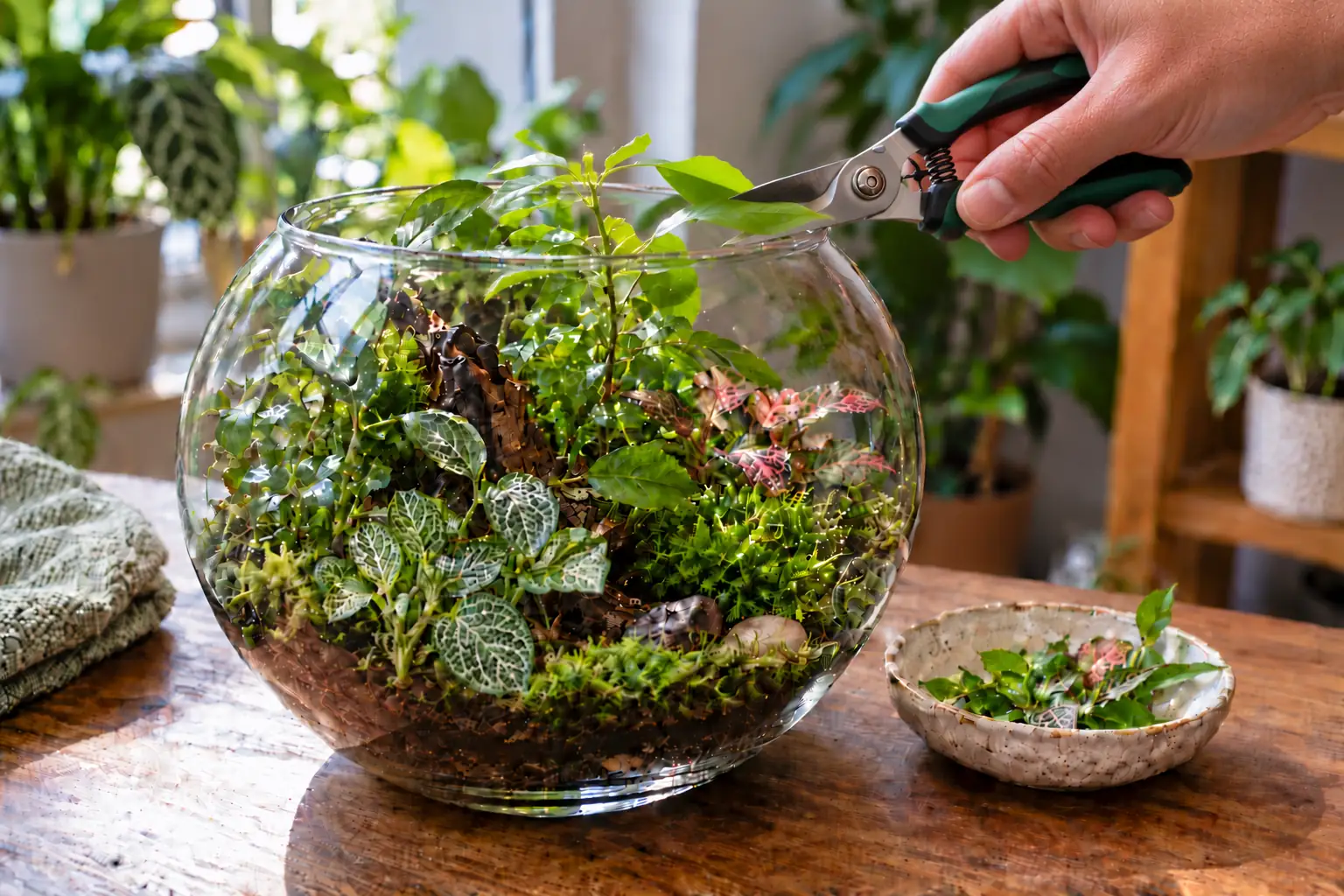
How and when to prune terrarium plants depends on the plant and how crowded the container has become. In most cases, prune lightly as needed: remove yellow or damaged leaves, shorten stems that get too tall, and trim growth that presses against the glass. Small, regular trims are usually better than waiting until the terrarium needs a major cutback.
Why Terrarium Plants Need Pruning
Terrariums give plants limited space. Even small plants can eventually spread, climb, or grow taller than the container allows. Pruning keeps the planting balanced and helps you maintain the miniature look that makes a terrarium attractive.
Iowa State University Extension recommends pruning terrarium plants as needed to keep them looking good. If a plant becomes too large or unruly for the space, replacement may be a better choice than repeated heavy pruning.
Missouri Extension makes a similar point: light trimming can bring plants back into bounds, and pinching growing tips before plants become too tall is usually better than waiting for a severe cutback.
How Often Should You Prune Terrarium Plants?
No single weekly or monthly pruning schedule works for every terrarium. Growth speed varies with plant type, light, temperature, moisture, and container size.
Check the terrarium during normal maintenance, and prune when you see a reason. Common signs include a stem reaching the lid, leaves pressing against the glass, one plant shading its neighbors, or fast-growing plants beginning to take over the display.
Oklahoma State University Extension describes pruning as periodic maintenance for aggressive or fast-growing terrarium plants. That is a better way to think about it than pruning simply because a certain number of days have passed.
What Scissors Should You Use?
Use a clean, sharp cutting tool that fits safely inside the container. Small scissors, fine snips, or pruning scissors work well for many terrariums. Clean, sharp tools make smoother cuts and are less likely to crush delicate stems.
For a narrow-neck terrarium, long-handled terrarium scissors can make it easier to reach crowded growth without disturbing nearby plants. The exact tool matters less than making a clear, safe cut.
Clean the blades before you begin, especially if the tool has been used on other plants. Penn State and Illinois Extension both recommend clean, sharp tools when taking plant cuttings, and the same basic practice makes sense when pruning inside a humid terrarium.
How to Prune Terrarium Plants Step by Step
Work slowly. In a small glass container, one careless cut can remove more of a plant than you intended.
- Inspect the whole terrarium before cutting. Decide which plants are actually causing crowding or touching the glass.
- Remove yellow, damaged, or dying leaves first. This often improves the appearance without much additional pruning.
- Trim long stems back a little at a time. When possible, make the cut just above a healthy leaf or node so the plant can branch from the remaining growth.
- Pinch or trim growing tips on plants that are getting too tall. Doing this early keeps the plant compact and reduces the need for a hard cutback later.
- Remove every clipping from the terrarium. Do not leave cut leaves or stems lying on the soil or moss.
- Close the terrarium again only after you are finished inspecting and cleaning the planting.
Do not try to reshape the entire terrarium in one aggressive session. If a plant needs a major reduction, several smaller trims or replacing the plant may be the better choice.
How Do You Prune Plants in a Narrow Terrarium?
A narrow opening makes the job slower, but the basic pruning rules do not change. Use a tool long enough to reach the plant without scraping the glass or forcing your hand into the opening.
Before making a cut, position the blades so you can see exactly which stem is between them. Cut one piece at a time. Long tweezers or forceps can help you lift the clipping out after each cut, so trimmed material does not fall into the planting.
If the plant is so crowded that you cannot see or reach the stems safely, removing and replacing it may be easier than trying to perform surgery through the neck of the container.
How Do You Keep Plants From Touching the Glass?
Prune leaves and stems before they stay pressed against the glass. Penn State specifically recommends removing leaves that are touching the glass, and Missouri Extension advises keeping foliage away from the sides of a closed container.
Leaves touching damp glass can stay wet for long periods. Missouri Extension notes that this can make them more likely to rot. Keeping a small gap also makes the terrarium easier to inspect and keeps the planting from looking crowded.
If the same plant quickly grows back against the glass after repeated trimming, it may simply be too large or too vigorous for that location.
What Should You Do When Plants Outgrow the Terrarium?
Pruning has limits. Iowa State Extension notes that no plant is a permanent addition to a terrarium because plants eventually outgrow the available space.
If light trimming no longer keeps a plant in proportion, you have three practical choices: reduce it more carefully, divide or propagate it when the species allows, or remove it and replace it with a smaller plant.
Do not keep cutting a plant harder and harder to make it fit a container it has clearly outgrown. A smaller or slower-growing replacement often gives a better long-term result.
Can Terrarium Cuttings Start New Plants?
Sometimes. Many common houseplants can be propagated from stem or leaf cuttings, but the method depends on the species. Iowa State Extension notes that plants that need pruning can be good candidates for propagation. In contrast, some plants cannot be started from ordinary stem cuttings and may need division or another method.
If you want to save a healthy trimming, identify the plant before deciding how to root it. Stem-cutting plants usually need a piece with at least one node. Other plants, including some ferns, are better divided rather than treated like a vine or trailing houseplant.
Use healthy, pest-free material and clean cutting tools. If you are unsure whether a particular terrarium plant can be propagated from the piece you removed, check that species before planting the cutting.
Common Terrarium Pruning Mistakes
- Waiting until the terrarium is badly overgrown before doing anything.
- Removing too much growth at one time when a lighter trim would work.
- Leaving clipped leaves and stems inside the terrarium.
- Using dull or dirty scissors that crush stems or spread plant problems.
- Repeatedly pruning a plant that is simply too large for the container.
- Assuming every healthy cutting can be propagated the same way.
If a plant is stretching because it is not getting enough light, pruning alone will not fix the cause. Check its growing conditions and size.
A Simple Terrarium Pruning Routine
- Look for yellow or damaged leaves.
- Check for foliage touching the glass or lid.
- Lightly trim overly long stems and fast-growing tips.
- Remove every clipping from the container.
- Step back and check the overall shape before cutting more.
- Replace plants that can no longer be kept in scale with reasonable pruning.
For the rest of your regular maintenance routine, see How to Care for a Terrarium.
The Bottom Line
The best way to prune terrarium plants is to make small, controlled cuts before the planting becomes badly overgrown. Trim yellow or damaged leaves, shorten stems that are getting too tall, and keep foliage from pressing against the glass.
Use clean, sharp tools, remove all clippings, and remember that pruning cannot keep every plant miniature forever. When a plant repeatedly outgrows the space, replacing it may be better than forcing it to fit.
Until next time.

Browse more Terrarium guides.
Sources and Further Reading
- Iowa State University Extension and Outreach – How to Create and Care for a Terrarium
- University of Missouri Extension – Terrariums
- Penn State Extension – Creating a Closed Terrarium
- Oklahoma State University Extension – Terrariums
- Iowa State University Extension and Outreach – How to Propagate Houseplants by Cuttings
- Illinois Extension – Propagation
- Penn State Extension – Propagating Houseplants