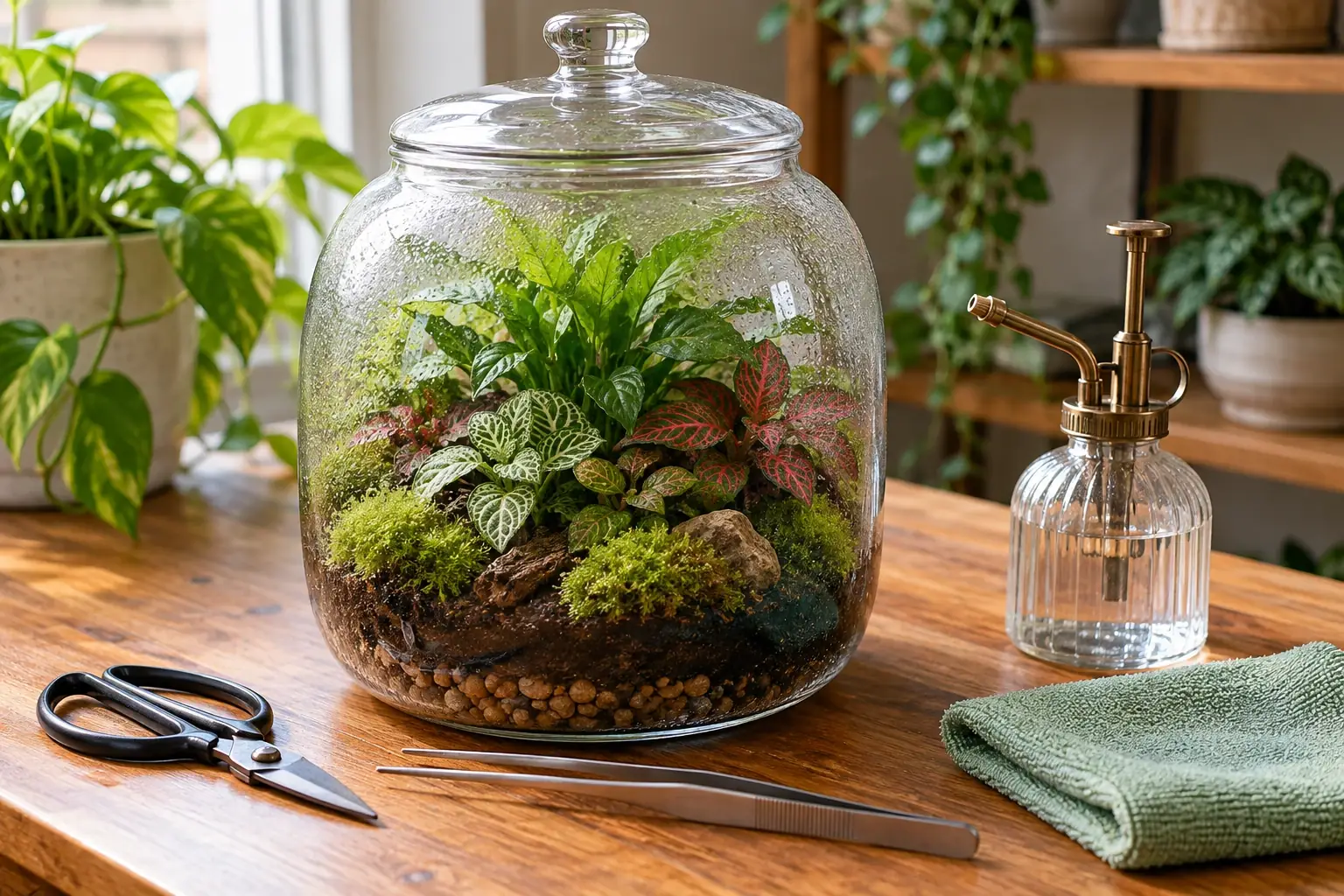
If you’re learning how to care for a terrarium, focus on four things: light, moisture, plant growth, and cleanliness. Keep the container out of direct sun, add water only when the terrarium shows that it needs it, trim plants before they crowd the glass, and remove dead or unhealthy growth.
Closed and open terrariums need different amounts of attention. A balanced closed terrarium can recycle moisture for months, while an open terrarium dries faster and usually needs more frequent checks.
You do not need a complicated maintenance schedule. A quick look every week or two is usually more useful than watering, pruning, or fertilizing just because the calendar says it is time.
Terrarium Care at a Glance
| Care Check | Closed Terrarium | Open Terrarium |
|---|---|---|
| Water | Only when condensation stops, soil dries, or plants show need | Check more often because moisture escapes |
| Light | Medium to bright indirect light | Match the plants, but avoid overheating glass |
| Pruning | Trim yellow, damaged, crowded, or glass-touching growth | Trim as plants outgrow the space |
| Fertilizer | Usually unnecessary; use very lightly only if truly needed | Depends on plants, but do not push fast growth |
| Cleaning | Remove dead material and wipe glass as needed | Remove dead material and keep the container tidy |
Know Whether Your Terrarium Is Open or Closed
The first care decision is knowing what kind of environment you have.
A closed terrarium has a lid that traps water vapor and raises humidity. Once the moisture cycle is balanced, it may need very little added water. An open terrarium lets water evaporate into the room, so the growing mix dries faster.
That difference affects almost every care decision. A closed terrarium with healthy condensation may need to be left alone, while an open terrarium with dry soil may need water sooner.
For a refresher on why closed containers recycle moisture, see our guide to how a terrarium works.
Give the Terrarium Bright Indirect Light
Most plant terrariums do well in medium to bright indirect light.
Avoid strong direct sun on the glass. Penn State Extension warns that a closed terrarium can heat up quickly in direct sunlight. University of Vermont Extension gives the same basic advice because the glass can trap heat and damage the plants.
If the plants begin leaning strongly to one side, rotate the container occasionally to keep growth more balanced.
Light needs still depend on the plants. A moss or fern terrarium can handle less intense light than an open succulent display. Match the location to the plants without overheating the container.
Water by What You See, Not by the Calendar
Do not water a terrarium on a fixed schedule.
For a closed terrarium, Iowa State University Extension says you may only need to water every three to six months, although timing can vary widely. Missouri Extension gives a similar range of about four to six months for many closed terrariums.
Look for signs instead. If condensation has stopped, the soil is becoming dry, or plants begin to droop, the terrarium may need a small amount of water.
Open terrariums dry faster, so they need more frequent checks. Even then, add water carefully. Many glass terrariums have no drainage hole, so extra water cannot escape.
For more detailed instructions, see our guide on how to water a terrarium.
If the glass stays heavily fogged or covered with large droplets, the problem may be too much moisture, not too little. Crack or remove the lid for a while and let some moisture escape.
Remove Dead Leaves and Unhealthy Growth
Yes, remove dead, yellow, damaged, or diseased leaves from a terrarium.
Dead plant material does not improve the display, and leaving unhealthy growth in a humid container can create more places for decay or disease to develop.
Penn State Extension recommends pruning leaves that have yellowed, touch the glass, or grow beyond the container. University of Vermont Extension also recommends removing unhealthy or damaged growth as part of normal grooming.
Use clean scissors or tweezers and remove the cut material from the container. Do not leave piles of trimmings on the soil.
Prune Before the Terrarium Becomes Crowded
Plants don’t stop growing just because they are inside glass.
Trim plants before they press hard against the sides, cover smaller plants, or fill every open space. Missouri Extension notes that light trimming and pinching can keep plants within bounds and encourage fuller growth.
If one plant becomes too large to manage, replacing it can be easier than repeatedly cutting it back. Iowa State University Extension specifically recommends removing plants that become too large or unruly and replacing them with something better suited to the space.
Leave some open space. A terrarium does not need to look packed to look healthy.
Should You Fertilize Terrarium Plants?
Usually, no.
Terrarium plants are supposed to stay small and grow slowly. Fertilizer can encourage faster growth, which means more crowding and more pruning.
Iowa State University Extension recommends avoiding fertilizer unless the plants show signs of low fertility. Missouri Extension says not to fertilize for at least the first year and suggests about one-quarter strength only if plants later appear weak or yellowish and other causes have been ruled out.
Penn State gives similar advice: after the first year, you may use a very dilute fertilizer if it is truly needed.
Do not treat every yellow leaf as a fertilizer problem. Too much water, too little light, root problems, or normal leaf aging can also cause yellowing.
What Should You Check During Weekly Terrarium Maintenance?
You don’t need to do a full maintenance job every week. A quick inspection is enough.
Look through the glass and check a few simple things:
Is the soil still damp enough for the plants?
Is a closed terrarium lightly fogging and clearing in a normal moisture cycle?
Is the glass heavily wet all day?
Are any leaves yellow, brown, mushy, or damaged?
Are plants touching the glass or crowding each other?
Do you see obvious mold, algae, or pests?
Are the plants leaning strongly toward the light?
If everything looks normal, leave it alone. Terrarium care often means resisting the urge to fix something that is not broken.
If you do notice a problem, change one thing at a time. That makes it easier to tell what actually helped.
How Long Do Terrariums Last?
Terrariums have no fixed lifespan.
A well-matched, well-maintained terrarium can last for years. Penn State Extension reports examples of healthy terrariums lasting close to a decade, while plants inside may still need pruning, replacement, or occasional refreshing along the way.
Longevity depends on the plants, container, light, moisture, and how well the plants fit together. A terrarium doesn’t have to stay completely unchanged to count as successful.
Think of it as a small garden. You may replace a plant, prune another, clean the glass, or adjust the design while keeping the same terrarium going for a long time.
How Do You Care for a Terrarium During a Vacation?
Do not add extra water just because you are leaving home.
If a closed terrarium is balanced, the soil is lightly moist, and the condensation cycle looks normal, leave it alone. Adding extra water before a trip can create a problem that was not there before.
Move the terrarium away from any place where it could receive unexpected direct sun or excessive heat while you are gone.
Open terrariums need more attention because they dry faster. For a short trip, check the soil before leaving and water only if the plants actually need it. For a longer trip, ask someone to check the terrarium rather than soaking it in advance.
A stable closed terrarium is one of the easier houseplant setups to leave alone for a vacation because it loses water so slowly.
How Do You Refresh an Old Terrarium?
Refresh only what needs refreshing.
Start by removing dead leaves, badly overgrown plants, and anything that is rotting or unhealthy. Prune plants that still fit the design but have become too large.
Clean the inside of the glass carefully so you can see the plants again. If one plant has outgrown the container, replace it with a smaller plant that wants the same light and moisture conditions.
Penn State suggests that after the first year, you can freshen a terrarium by changing a plant or adding a clean decorative feature. Iowa State also encourages replacing plants that become too large for the space.
Do not tear apart a healthy terrarium just because it looks older. If the plants are healthy and the moisture balance is good, a light cleanup may be all it needs.
Common Terrarium Care Mistakes
Watering on a schedule instead of checking the terrarium first.
Putting the container in direct sun where the glass can trap heat.
Leaving dead or diseased plant material inside.
Fertilizing too often and encouraging plants to outgrow the space.
Letting one fast-growing plant crowd everything else.
Adding water before a vacation just because you will be away.
Making several changes at once when one problem appears.
Treating open and closed terrariums as if they need the same care.
The Bottom Line
Learning how to care for a terrarium is mostly about watching the container and responding to what the plants actually need.
Keep it out of direct sun, water only when the moisture level calls for it, remove dead growth, prune before plants become crowded, and skip fertilizer unless there is a real reason to use it.
A healthy terrarium should not create a long chore list. Once the light, plants, and moisture are balanced, the best care is often a quick check, then leaving it alone.
Until next time.

Browse more Terrarium guides.
Sources and Further Reading
- Iowa State University Extension – How to Create and Care for a Terrarium
- Penn State Extension – Creating a Closed Terrarium
- University of Missouri Extension – Terrariums
- University of Vermont Extension – Creating a Garden in a Terrarium
- University of Vermont Extension – Building a Dish Garden