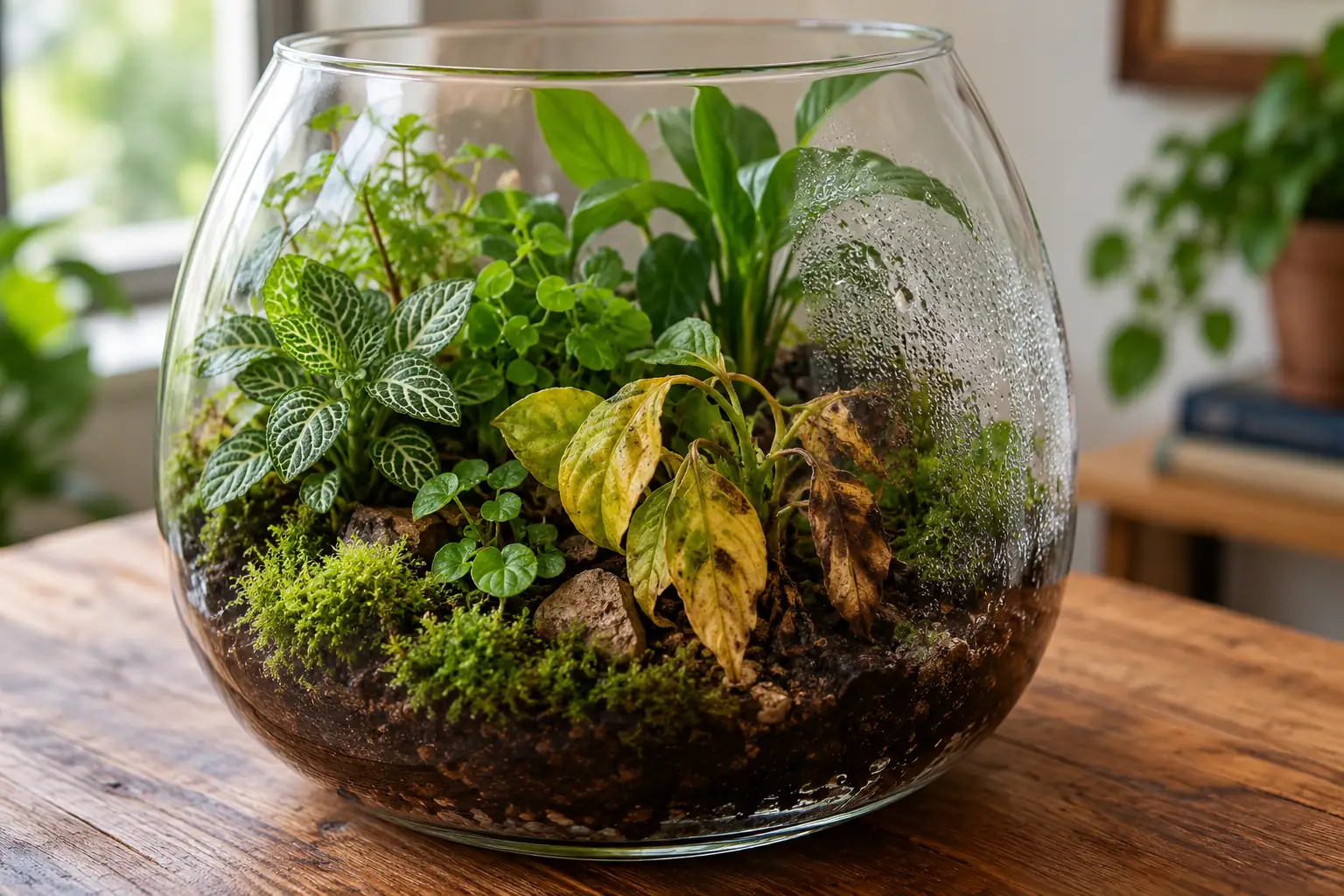
If you are asking yourself, “Why are my terrarium plants dying?” start by checking moisture, light, and root health before you add water or fertilizer. Yellow leaves, brown edges, and wilting can have several causes. In a terrarium, it’s especially important to rule out too much moisture because most containers have little or no drainage, and closed terrariums recycle much of their own water.
The good news is that a struggling terrarium is not always a lost cause. If you identify the problem early, you can correct the conditions, remove damaged growth, and save healthy plants before the whole planting declines.
Start With the Moisture Level
Water is the first thing to check because both too much and too little can make a plant wilt. Missouri Extension warns that heavy watering in a terrarium can leave standing water in the lower layers and encourage root disease. Closed terrariums may go months without needing additional water, depending on the plants, soil, light, and container.
Check the soil and glass before reaching for the watering bottle. Persistently wet soil, heavy condensation, or water collecting in the bottom of the container can point to excess moisture. If a closed terrarium is too wet, Iowa State University Extension recommends cracking or opening the lid so some moisture can escape.
If the soil is genuinely dry, the glass shows little or no condensation, and the plants are beginning to wilt, the terrarium may need water. Add a small amount and give it time to move through the root zone. Don’t assume every wilted plant is thirsty.
Why Are My Terrarium Plant Leaves Turning Yellow?
Yellow leaves are a symptom, not a diagnosis. Overwatering is a common cause, especially when the soil stays wet. Iowa State Extension lists yellowing, browning, leaf drop, and wilting as possible symptoms of overwatering and root damage.
Low light can also cause pale or yellow growth, and a plant recently moved may drop or yellow some leaves while it adjusts. Less often, yellowing can point to a nutrient problem. Iowa State notes that low fertility may cause yellow leaves, yellowing between the veins, or weak growth.
In a terrarium, don’t reach for fertilizer as your first response to yellow leaves. Terrarium plants usually grow slowly, and extra fertilizer can encourage faster growth and crowding. Check moisture, light, and roots first. If the plant is otherwise healthy and shows a clear nutrient problem, use only a mild fertilizer appropriate for that plant.
Why Are the Leaves Turning Brown?
Brown leaves can mean different things depending on how they look and what the soil is doing. Dry, crispy edges can occur when a plant is too dry, exposed to hot direct sun, or stressed by temperature changes. Illinois Extension also lists improper watering, cold drafts, insects, and excess fertilizer as possible causes of brown leaf tips.
Soft, dark, or mushy brown tissue in a wet terrarium is more concerning because it may be decay rather than simple dryness. Leaves that stay pressed against damp glass are also more likely to rot. Remove decaying material promptly rather than leaving it in the terrarium.
Direct sunlight is another common terrarium problem. A closed glass container can heat up quickly in strong sun. If leaves look bleached, scorched, or crispy and the glass gets hot, move the terrarium to bright indirect light instead of trying to fix it with more water.
Why Are My Terrarium Plants Wilting?
Wilting is one of the easiest symptoms to misread. A dry plant wilts because it cannot get enough water. An overwatered plant can also wilt because damaged roots can no longer take up water normally.
That means the correct response is to check the soil before watering. If the mix is dry and the plant has no other signs of rot, a careful watering may help. If the mix is wet and the plant is still limp, adding more water can make the problem worse.
Iowa State Extension specifically warns that root rot can be mistaken for drought because infected plants may wilt. When wilting happens in wet soil, inspect the roots before deciding the plant needs another drink.
How Do You Identify Root Rot in a Terrarium?
Root rot is usually connected with soil that stays too wet for too long. Healthy roots are generally firm and light colored. Rotted roots are often brown, reddish, or dark, feel soft or mushy, and may lose their outer tissue when handled.
You may also see yellow leaves, wilting even though the soil is wet, leaf drop, a soft stem base, or a plant that collapses from the bottom upward. These symptoms overlap with other problems, so the roots give you a better clue than the leaves alone.
If you can remove the affected plant without tearing apart the whole terrarium, gently inspect the root system. You do not need to identify the exact fungus at home. The useful question is whether enough healthy, firm roots remain for the plant to recover.
Can an Overwatered Terrarium Recover?
Yes, sometimes. Recovery depends on how long the terrarium stayed too wet and how much of the root system is still healthy.
For a closed terrarium that is too moist, stop adding water and open the lid so excess moisture can escape. Remove dead leaves and any soft, decaying plant material. Missouri Extension recommends removing plants that begin to wilt or decay before the problem spreads, and letting a closed terrarium dry out more when rot develops.
If you also notice mold growing on the soil or plant debris, see our guide to how to get rid of mold in a terrarium.
If a plant has root damage, lift it carefully and remove limp, brown, or dead roots with clean tools. Replant it in fresh, appropriate potting mix if enough healthy roots remain. If nearly the entire root system is mushy or dead, the plant may not recover.
Do not try to rescue a waterlogged terrarium by adding fertilizer. Fix the moisture problem first, then give recovering plants time to stabilize.
How Do You Save Healthy Plants From a Failed Terrarium?
If one terrarium is failing but some plants still look healthy, you may be able to save those plants instead of discarding everything.
Remove the healthiest plants first and inspect their leaves, stems, and roots. Trim away dead or rotted roots and remove damaged foliage. Keep badly decayed plants separate so you don’t put them back into the new planting.
Replant healthy survivors in fresh potting mix. If you are not sure why the original terrarium failed, use individual pots with drainage for a short recovery period to make it easier to monitor each plant before rebuilding the display. Once the plants are stable, you can decide whether to return them to a cleaned terrarium or keep them separately.
Before rebuilding, correct the original cause. If the old terrarium stayed wet, reduce watering. If it overheated, move it. If one plant repeatedly failed while the others were healthy, that species may not have matched the moisture, light, or space available in the container.
Other Reasons Terrarium Plants Decline
Not every dying terrarium is caused by root rot. Plants can also decline because the light is too weak, direct sun is too intense, the temperature changes sharply, the plants are crowded, or a species is simply a poor match for the terrarium type.
A closed tropical terrarium favors plants that tolerate steady humidity and moist soil. A plant that prefers dry soil and strong airflow can struggle even when the other plants are thriving. The opposite is true in a dry open terrarium.
Watch whether the problem affects one plant or the whole container. If only one species is declining, plant choice may be the issue. If several plants begin yellowing, wilting, or rotting at the same time, look for a shared problem such as excess water, poor light, overheating, or disease.
A Quick Terrarium Troubleshooting Check
- Wet soil + yellowing or wilting: suspect overwatering or damaged roots.
- Dry soil + wilting or crispy edges: the plant may need water.
- Bleached or crispy patches + strong sun or hot glass: move the terrarium out of direct sunlight.
- Leggy, pale growth: the terrarium may need more useful light.
- One plant declining while the others look healthy: check whether that species fits the terrarium conditions.
- Several plants declining together: look for a shared water, light, temperature, or disease problem.
For a more detailed watering routine, see How to Water a Terrarium.
The Bottom Line
When terrarium plants start dying, do not treat the symptom before you check the conditions. Yellow leaves, brown edges, and wilting can all come from more than one cause. Start with moisture, then check light, heat, and root health.
In many terrariums, the biggest danger is keeping the root zone too wet. A wilted plant in wet soil may need less water, not more. If you catch the problem early, dry the container appropriately, remove decaying material, and save the plants that still have healthy roots.
Until next time.

Browse more Terrarium guides.
Sources and Further Reading
- Iowa State University Extension and Outreach – How to Create and Care for a Terrarium
- University of Missouri Extension – Terrariums
- Iowa State University Extension and Outreach – Diagnosing Houseplant Problems Related to Poor Culture
- Iowa State University Extension and Outreach – Root Rots of Houseplants
- Illinois Extension – Troubleshooting Houseplants
- Iowa State University Extension and Outreach – How to Care for Houseplants
- Penn State Extension – Diagnosing Poor Plant Health