If you are trying to get rid of algae in your terrarium, start by removing the visible green growth, then correct the conditions that help it return. That is the key to keeping it gone for good. Algae needs moisture, light, and nutrients, so a wet glass container with bright light can make it grow easily.
A little algae is usually more of an appearance problem than an emergency. University of Maryland Extension notes that algae in potting media is usually not harmful to plants. Heavy growth can become a problem, though, because a thick mat can interfere with water soaking into the growing mix and can feed pests such as fungus gnats.
Why Does Algae Grow in a Terrarium?
Algae grows where water, light, and nutrients come together. University of Connecticut Extension lists those three things as the basic requirements for algae growth. Warm temperatures, high humidity, frequent moisture, and fertilizer can make the conditions even better.
Terrariums naturally hold moisture, and clear glass lets light reach surfaces that would stay darker in an ordinary plant pot. That means algae can appear on the glass, soil surface, rocks, drainage layer, or other damp materials.
The goal is not to make a plant terrarium dry or dark. The goal is to remove excess moisture, avoid unnecessary fertilizer, and stop giving algae more light and nutrients than it needs.
Why Is Algae Growing on My Terrarium Glass?
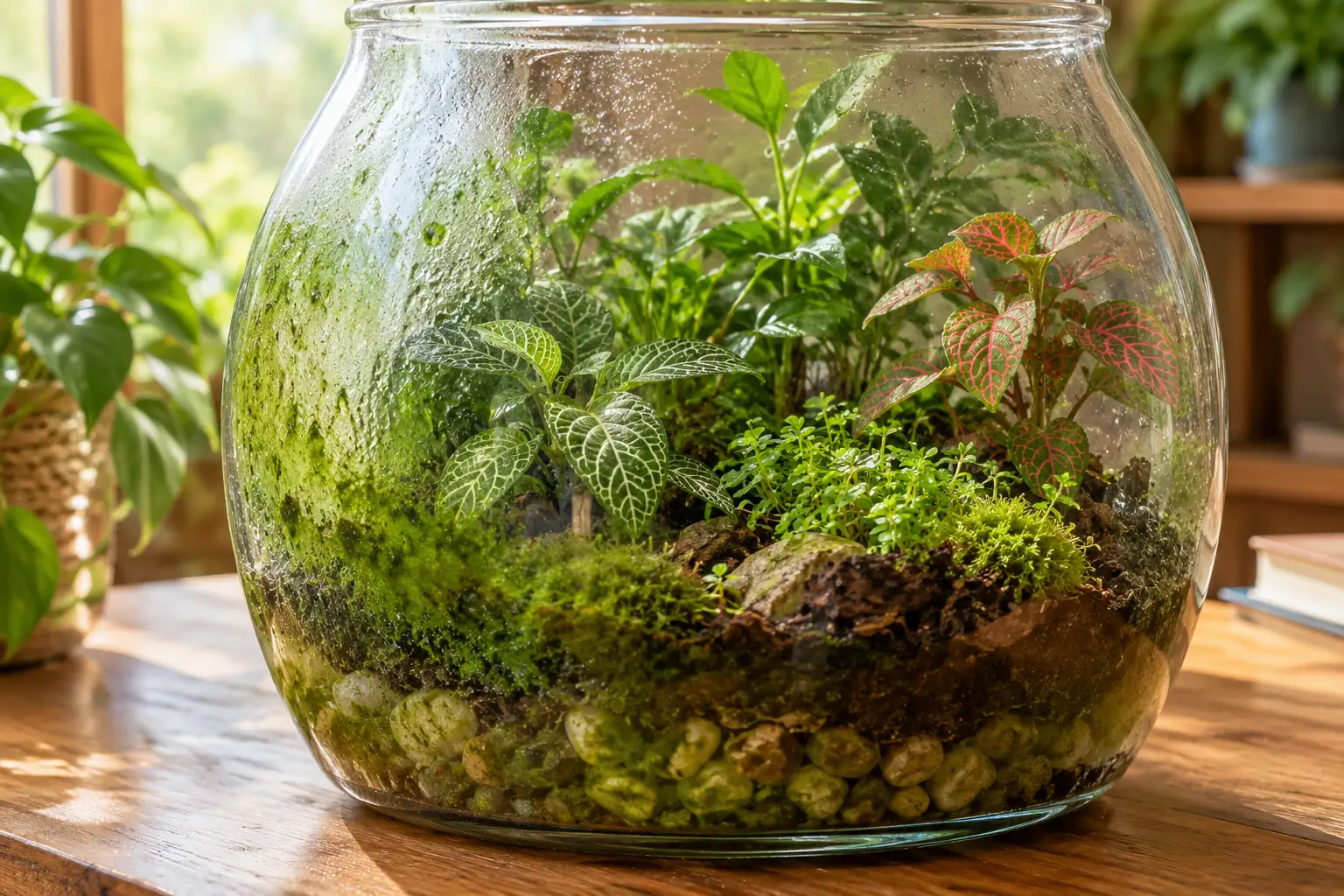
A green film on the inside of the glass usually means the surface stays moist while getting enough light for algae to grow. Condensation can keep the glass damp for long periods, especially in a closed terrarium.
Wipe the glass with a clean cloth, paper towel, or cotton pad that you can remove from the container afterward. For a narrow container, long tweezers can hold a small piece of clean cloth so you can reach the inside surface.
North Carolina Cooperative Extension recommends cleaning algae from terrarium sides with a small sponge and keeping the terrarium out of direct sun while still providing enough light for the plants.
If the green film returns quickly, cleaning the glass is only treating the symptom. Check whether the terrarium stays too wet or gets stronger light than the plants need.
Do Algae cause Green Terrarium Soil?
It can be. University of Maryland Extension describes algae on indoor-plant growing media as a greenish layer that develops under moist conditions.
Not every green patch is algae, however. Moss, liverworts, or blue-green cyanobacteria can also show up on persistently wet surfaces. At first, the exact identity matters less than what the green growth tells you: that the surface stays wet long enough for something to establish itself.
If the growth is thin and only on the surface, gently scrape or lift away the affected top layer without digging deeply into plant roots. University of Maryland recommends breaking up an algae mat or removing the upper layer of growing medium when algae becomes excessive.
Then correct the moisture problem. A closed terrarium should stay humid, but the soil surface doesn’t need to stay soggy.
How to Get Rid of Algae in Your Terrarium
Start with physical cleaning and environmental changes. Many commercial algae-control products are made for greenhouse surfaces or water systems, not planted terrariums. University of Connecticut Extension warns that some algaecides can damage plant tissue.
- Wipe algae off the glass. Remove the cloth or pad afterward so you don’t just move the algae somewhere else.
- Lift or scrape off a thin algae mat on the soil surface. Remove only the affected top material when possible.
- Remove loose rocks or decorations that are heavily coated if you can do so without damaging the plants.
- Check the moisture level. If the terrarium is very wet or heavily condensed, open the lid and let some excess moisture escape.
- Stop watering until the growing mix actually needs more moisture. Do not water just because a schedule says it is time.
- Check the light. Move the terrarium away from hot, direct sun or an overly strong grow light if green growth develops on exposed surfaces.
- Cut back unnecessary fertilizer. Terrarium plants usually need little feeding, and extra nutrients can encourage algae and excessive plant growth.
- Remove fallen leaves and other debris so algae and other unwanted growth have fewer nutrient sources.
After cleaning, watch the terrarium for a week or two. If the algae quickly returns in the same place, look again for the combination of excess moisture, light, and nutrients that is keeping that surface favorable.
How Do You Remove Algae From Terrarium Drainage Rocks?
Algae can grow on drainage rocks when light reaches the bottom of a clear container, and the rocks stay wet. This is especially noticeable when water collects in the lower layer.
If the rocks are decorative and easy to remove, take out the affected pieces, rinse or scrub them clean away from the terrarium, let them dry, and return them only if doing so will not disturb the planting.
If the drainage layer is buried under the soil, do not tear apart an otherwise healthy terrarium to make the bottom rocks look perfect. Reduce excess water and light reaching the lower layer first. A small amount of green growth below the soil line is usually less important than keeping the plants healthy.
If water is actually pooling in the bottom, that is a moisture warning. Oklahoma State University Extension recommends keeping terrarium potting mix moist but not wet, and removing excess water if you add too much.
Why Is the Bottom Layer of My Terrarium Turning Green?
The same basic conditions can turn the bottom layer green: light reaches the lower part of the container, moisture stays present, and algae has nutrients available.
A clear glass terrarium makes the lower layers visible, so algae that might go unnoticed in an opaque flowerpot is easy to spot. Green drainage rocks or a green film against the glass do not automatically mean the whole terrarium is failing.
Check for standing water first. If the lower layer is constantly flooded, let the terrarium dry down and adjust your watering. If there is no standing water and the plants are healthy, light surface algae in the bottom layer may be mostly cosmetic.
Avoid wrapping or covering the terrarium in a way that blocks the light your plants need to hide a little green color. Fix the moisture balance instead.
Can Excess Fertilizer Trigger Algae in a Terrarium?
Yes. Algae needs mineral nutrients, and extra fertilizer can supply more of them. University of Connecticut Extension recommends avoiding excessive fertilization when trying to suppress algae.
Terrariums usually need very little fertilizer anyway. Iowa State University Extension recommends avoiding fertilizer because it encourages plant growth and earlier crowding. Missouri Extension also notes that terrarium plants seldom need fertilizer and suggests only light feeding when plants clearly show a need.
If you see algae and the plants look healthy, don’t add fertilizer just because it’s been a certain number of weeks or months. More nutrients can make the algae problem easier to maintain.
Why Is Algae Growing on My Terrarium Leaves?
Green growth on leaves can happen when foliage stays wet and receives enough light, although it can be harder to identify than algae on glass or soil. Dust, mineral residue, moss spores, cyanobacteria, or fungal growth can sometimes look similar.
If a healthy leaf has a light green film, gently wipe it with a damp soft cloth or cotton swab and see whether the coating comes away. Do not scrub delicate foliage. Remove badly damaged or decaying leaves instead of trying to clean them.
Then check why the leaves are staying wet. Oklahoma State University Extension warns against excessively wet terrarium foliage because it does not dry quickly and can become vulnerable to disease. Keep the potting mix moist, not wet, and avoid unnecessary misting when the terrarium already has enough moisture.
If the coating keeps returning or the leaf turns soft, brown, spotted, or rotten, treat it as a plant-health problem rather than harmless algae.
How to Keep Terrarium Algae From Coming Back
- Keep the growing mix moist, not waterlogged.
- Open a closed terrarium when condensation builds up excessively.
- Use bright indirect light instead of hot direct sunlight.
- Wipe algae from the glass before it becomes a thick film.
- Remove fallen leaves and other plant debris.
- Avoid routine fertilizer unless the plants actually show a need.
- Do not keep adding water when the lower layer already looks wet.
- Watch where algae returns; repeated growth usually points to the condition that still needs fixing.
You do not need to eliminate every microscopic trace of algae. The practical goal is to keep it from coating the glass, forming a thick mat on the soil, or signaling that the terrarium is staying too wet.
The Bottom Line
To remove algae from your terrarium, remove visible green growth, reduce excess moisture, check the light, and avoid unnecessary fertilizer. Algae usually keeps returning when the same wet, bright, nutrient-rich conditions remain.
A small amount of algae is often mostly cosmetic. Pay closer attention when it forms a thick mat, spreads quickly, appears with standing water, or returns soon after cleaning.
For help balancing light without overheating your plants, see Do Terrariums Need Sunlight?
Until next time.

Browse more Terrarium guides.
Sources and Further Reading
- University of Maryland Extension – Algae and Fungal Growth on the Soil of Indoor Plants
- University of Connecticut Extension – Managing Algae in the Greenhouse
- Iowa State University Extension and Outreach – How to Create and Care for a Terrarium
- Oklahoma State University Extension – Terrariums
- North Carolina Cooperative Extension – Terrarium
- University of Missouri Extension – Terrariums
- Penn State Extension – Creating a Closed Terrarium