What plants are good for terrariums? In most cases, the best choices are small plants that grow slowly, tolerate the container’s humidity, and share similar light and moisture needs.
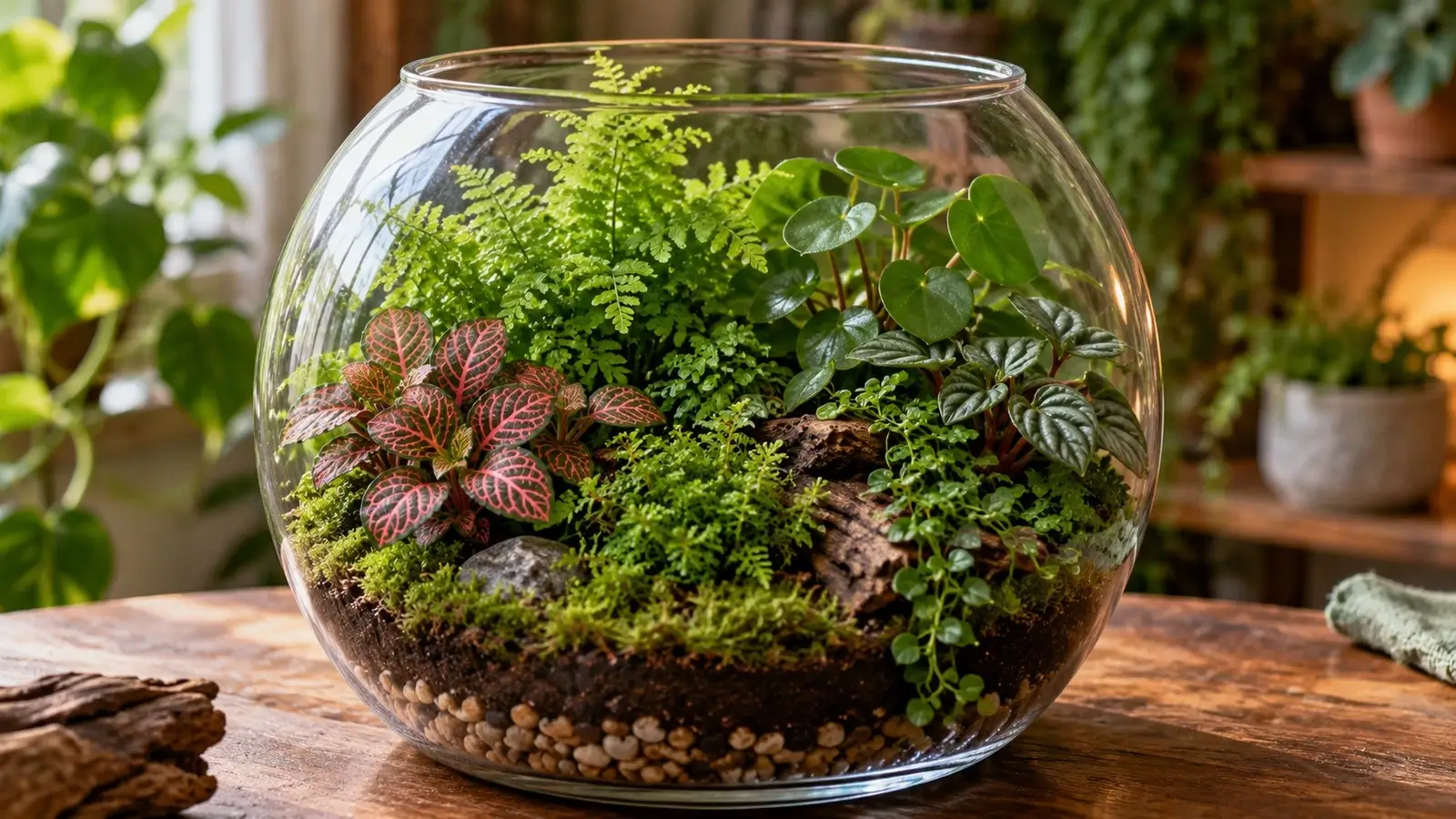
For a closed terrarium, good choices often include fittonia, small ferns, pilea, selaginella, creeping fig, and other compact tropical plants that enjoy humid conditions. Open terrariums give you more flexibility, but the plants still need to match the container and each other.
The biggest mistake is choosing plants only because they look good together. A terrarium is a shared growing space. If one plant wants constantly moist soil and another wants to dry out between waterings, one of them will eventually be unhappy.
If you are still gathering supplies, start with what you need to make a terrarium. Once you have the container and basic materials, plant selection becomes much easier.
Terrarium Plants at a Glance
| Plant | Growth Habit | Best Fit | Main Strength |
|---|---|---|---|
| Fittonia (nerve plant) | Low and spreading | Closed terrariums | Compact, colorful foliage and likes humidity |
| Selaginella | Low and creeping | Closed terrariums | Loves high humidity and fills the ground layer |
| Small Pilea | Mounding or trailing | Closed or humid terrariums | Compact foliage with many textures and colors |
| Small Peperomia | Mounding or trailing | Depends on variety | Many compact choices; match moisture needs |
| Maidenhair fern | Upright and arching | Closed terrariums | Likes moisture, humidity, and filtered light |
| Creeping fig | Trailing and climbing | Larger closed terrariums | Can cover wood, stone, or the back of a display |
| Baby’s tears | Low and spreading | Closed terrariums | Creates a dense green carpet |
| Miniature African violet | Small rosette | Humid display terrariums | Adds flowers and color |
What Makes a Plant Good for a Terrarium?
A good terrarium plant does more than fit through the container opening. It should also fit the environment you are creating.
Small size matters because a terrarium has limited room above and below the soil. Slow-growing plants are usually easier to manage because they do not crowd the glass or bury neighboring plants as quickly.
Humidity is another major factor. Closed terrariums trap moisture and create a warm, humid environment. Iowa State University notes that this environment suits many tropical houseplants. Penn State recommends choosing small plants that prefer moist woodland or tropical conditions for closed terrariums.
Compatibility matters as much as the individual plant. Plants growing in the same terrarium should have similar needs for light, soil moisture, temperature, and humidity. You cannot water one corner of a tiny glass container like a rainforest while keeping the other corner dry like a desert.
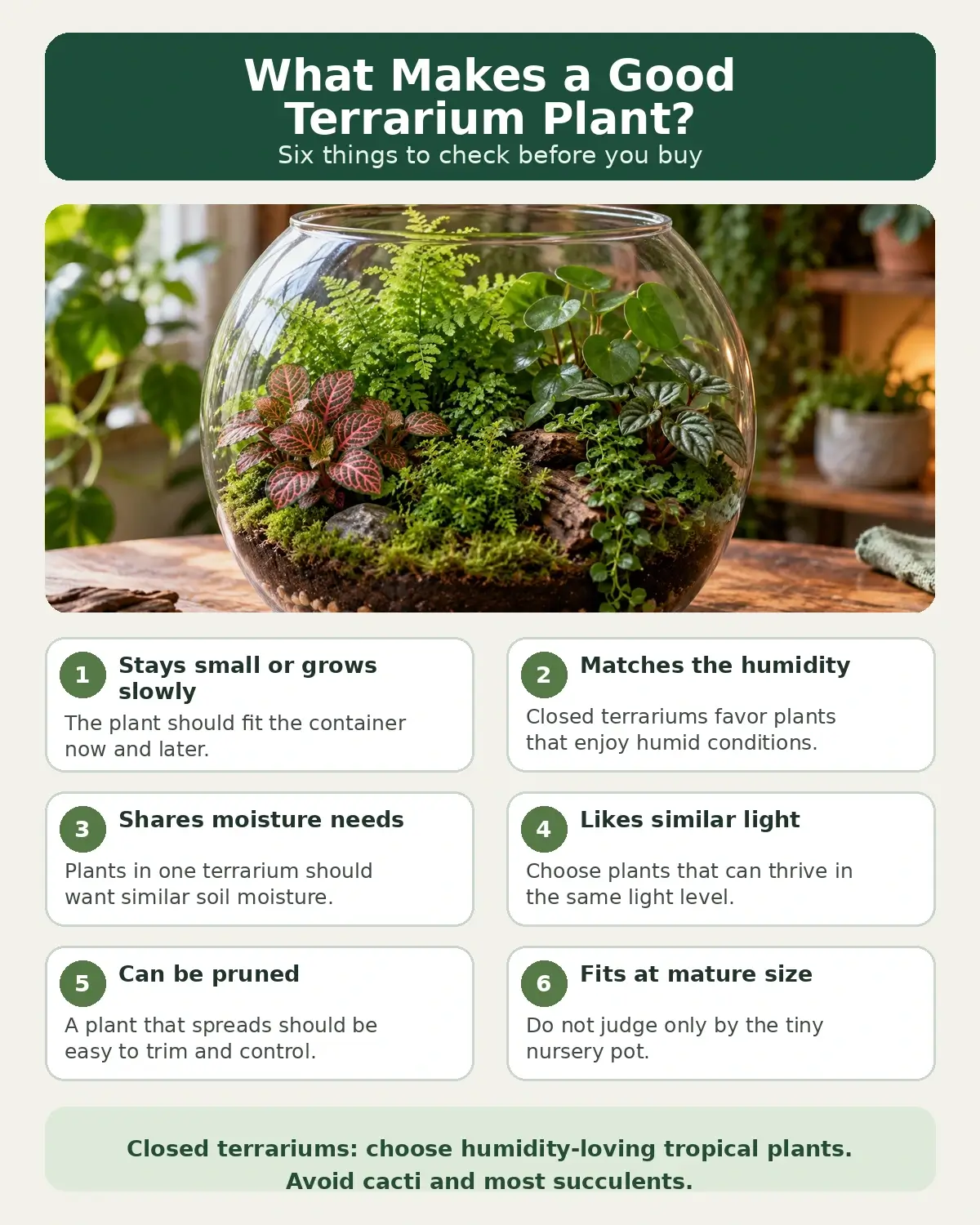
A useful plant checklist is:
- Does it stay reasonably small?
- Does it tolerate this terrarium’s humidity level?
- Does it want about the same amount of moisture as the other plants?
- Does it prefer similar light conditions?
- Can you prune it if it starts to spread?
- Will its mature size still make sense in the container?
Answer those questions before you buy plants to avoid many problems later.
Which Terrarium Plants Are Best for Beginners?
For a first closed terrarium, fittonia is one of the easiest plants to understand. It stays fairly low, spreads instead of shooting straight up, and thrives in humid conditions. Its colorful leaf veins also add interest without needing flowers. North Carolina State Extension describes fittonia as a low-growing plant that stays fairly small, which is one reason dwarf forms work well in terrariums.
Selaginella is another useful choice for humid terrariums. It looks like moss, although it is a different type of plant. It forms a soft green layer near the soil surface and does well with high humidity and indirect light. It can spread quickly, so you may need to trim it occasionally.
If you’d rather grow real moss, see our guide on how to make a moss terrarium.
Small Pilea plants are also worth considering. Iowa State includes the aluminum plant and silver sparkles plant among plants suited to terrariums. Pilea varieties can add puckered, metallic, silver, or bright green foliage without taking over the entire display immediately.
Small Peperomia varieties can work well when you want thicker leaves and a compact shape. The genus includes many different plants, so do not assume every Peperomia has identical needs. Choose a smaller variety and make sure its watering requirements match the rest of the terrarium.
Ferns are classic terrarium plants because many species enjoy moisture, humidity, and filtered light. Maidenhair fern is beautiful, but it can be less forgiving if it dries out. For a beginner, a small fern can work well when you are willing to keep the moisture level steady.
How Do You Choose Compatible Terrarium Plants?
Start by deciding whether the terrarium will be open or closed.
A closed terrarium holds much more humidity. That makes it a natural home for plants such as fittonia, ferns, selaginella, pilea, and other tropical or woodland plants that don’t like dry air.
An open terrarium loses moisture faster. Some plants that dislike constantly humid conditions are easier to manage in an open terrarium. If you are using succulents or cacti, keep them out of a closed terrarium. Penn State specifically recommends saving those plants for open terrariums or dish gardens.
Next, compare light needs. A plant that wants bright indirect light can struggle beside a plant that truly prefers deeper shade if you place the container for only one of them.
Then compare moisture needs. This matters because all the roots share the same small volume of growing mix. Avoid combining plants that want constantly moist soil with plants that need long dry periods.
Finally, think about growth speed. One aggressive plant can turn a balanced display into a one-plant terrarium. A fast spreader is not automatically a bad choice, but you need to be willing to prune it.
If you haven’t decided which container style you are building, compare our closed terrarium guide with our open terrarium guide before choosing plants.
Which Terrarium Plants Stay the Smallest?
No single terrarium plant is the smallest because the answer depends on the species and cultivar. A better approach is to look for plants that are naturally compact or sold as miniature or dwarf forms.
Fittonia is a useful example. North Carolina State Extension says it commonly grows as a low, spreading plant and stays fairly small indoors. That makes it easier to fit under a lid than many upright houseplants.
Small Pilea and Peperomia varieties can also work in tight spaces. Trailing Peperomia such as string of turtles stays low and grows slowly, while small Pilea varieties can be pinched back to keep them compact.
Miniature cultivars matter. Creeping fig, for example, is naturally a vigorous climber, but miniature forms such as ‘Minima’ and ‘Quercifolia’ are available. Even miniature creeping fig still needs pruning because it can attach itself to wood, stone, or other surfaces and keep spreading.
When shopping, do not judge size only by the tiny nursery pot. Check the mature growth habit. A plant can look perfect when it is two inches tall and still become much too large for a small jar later.
Which Plants Can Grow in a Closed Terrarium?
Closed terrariums favor plants that enjoy warm, humid conditions and fairly steady soil moisture.
Good possibilities include:
- Fittonia
- Selaginella
- Small tropical ferns
- Pilea
- Prayer plant in a larger container
- Baby’s tears
- Creeping fig
- Miniature African violets
Iowa State lists many of these plants for terrariums, including fittonia, ferns, peperomia, pilea, prayer plants, creeping fig, baby’s tears, and miniature African violets.
The key is not to treat that list like a shopping checklist. You do not need eight species in one jar. Two or three compatible plants often make a cleaner beginner terrarium and leave room for them to grow.
Avoid cacti and most succulents in a closed terrarium. The trapped humidity works against the dry conditions those plants generally prefer.
If you are building this type of container for the first time, our guide to making a closed terrarium walks through the full setup.
Which Terrarium Plants Tolerate Low Light?
Low light does not mean no light. Plants still need light for photosynthesis, and many houseplants that tolerate lower light look better and grow stronger in bright, indirect light.
Some Peperomia varieties tolerate low indoor light for a while. Maidenhair ferns can grow in partial shade to shade, although they still need enough light to stay healthy. Creeping fig tolerates part shade but generally does well in bright indirect light indoors.
Fittonia does well in bright to medium indirect light, so it should not be treated like a plant for a dark shelf.
If the room is genuinely dim, a small grow light is a better solution than trying to find a plant that can survive with too little light. Iowa State notes that supplemental lighting can make up for indoor spaces that do not provide enough natural light.
Also keep the terrarium out of strong direct sun. A glass container can heat quickly, especially when closed. Bright, indirect light is the safer target for many tropical terrarium plants.
Which Climbing Plants Can Grow in a Terrarium?
Creeping fig (Ficus pumila) is one of the most useful climbing choices for a larger terrarium.
North Carolina State Extension describes creeping fig as a vigorous climber that attaches itself to walls or supports with short roots. It likes high humidity and can grow in bright indirect light or part shade indoors.
That makes it useful when you want a plant to climb cork bark, driftwood, stone, or a background panel.
The downside is the same trait that makes it interesting: it grows aggressively. In a small terrarium, creeping fig can cover neighboring plants if you ignore it. Prune it regularly and consider a miniature cultivar when space is limited.
Trailing plants can create a similar effect without actually climbing. String of turtles, silver sparkles Pilea, and baby’s tears can spill over rocks or wood and soften the display’s edges.
What Plants Should You Avoid in a Terrarium?
The wrong plant usually doesn’t match the environment.
For a closed terrarium, avoid:
- Cacti and most succulents that prefer drier air and soil
- Large houseplants that quickly outgrow the container
- Fast-growing plants you aren’t willing to prune
- Plants with very different moisture needs
- Plants that already show pests, rot, or disease
- Plants that require intense direct sun
Also be cautious with plants labeled “terrarium plants” at a store. That label doesn’t guarantee every plant on the shelf belongs in the same container.
Choose the terrarium type first, then choose plants that match it.
A Simple Beginner Planting Plan
For your first planted terrarium, keep the plant list short.
Choose one plant to act as the main feature, one smaller plant to fill the middle level, and one low or trailing plant to cover part of the soil.
For example, a humid closed terrarium might use a compact fittonia as the main plant, a small Pilea for a second texture, and Selaginella along the front.
Leave open space between the plants. A newly planted terrarium does not need to look full on day one. The plants need room to grow, and open space makes pruning and maintenance easier later.
Once you’ve selected the plants, our guide to layering a terrarium can help you build the container from the bottom up.
The Bottom Line
Good terrarium plants are small, compatible, and suited to the container’s conditions.
For a closed terrarium, fittonia, selaginella, small ferns, pilea, creeping fig, and other humidity-loving tropical plants are good places to start. For an open terrarium, choose plants that are better suited to the lower humidity and faster drying that comes with an open container.
Do not choose plants one at a time without thinking about the group. Match their moisture, light, humidity, and growth habits first. A simple terrarium with two or three compatible plants will usually be easier to manage than a crowded jar full of plants that want different things.
Until next time.

Sources and Further Reading
- Iowa State University Extension – Terrarium Care
- Penn State Extension – Closed Terrariums
- NC State Extension – Fittonia (Nerve Plant)
- NC State Extension – Creeping Fig
- NC State Extension – Selaginella
- Iowa State University Extension – Houseplant Lighting