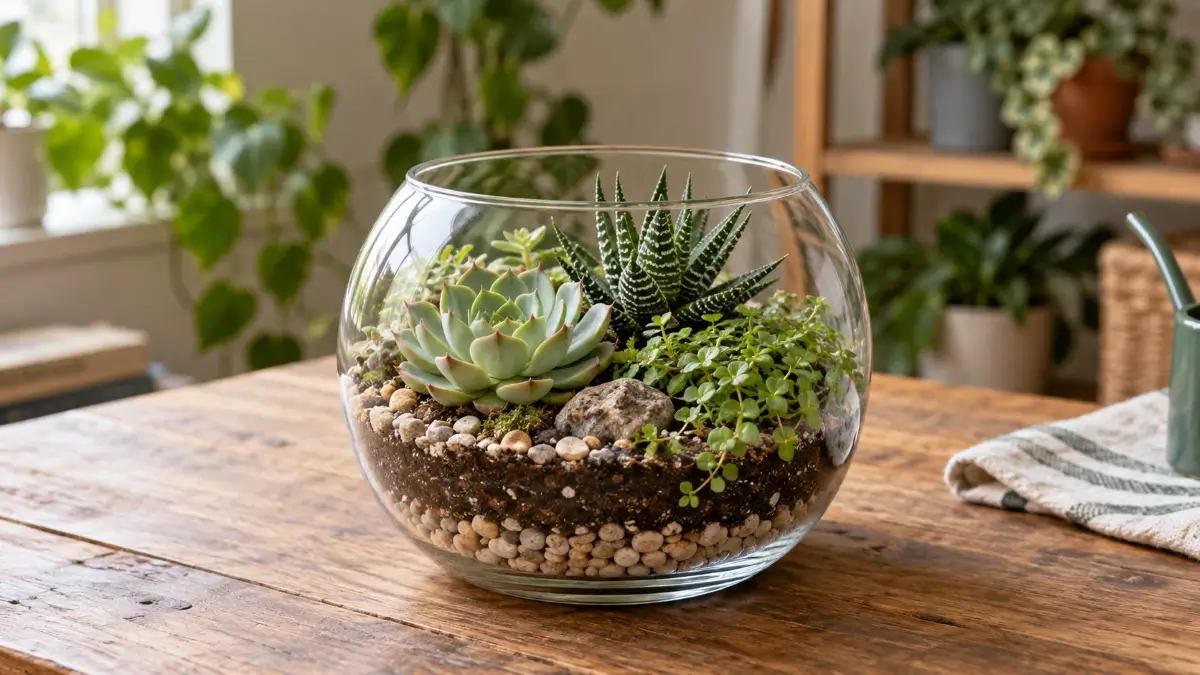
Learning how to make an open terrarium is simple: choose a clear container without a sealed lid, add a growing mix that suits your plants, plant a few compatible species, water carefully, and place the terrarium where it gets the right amount of light.
Unlike a closed terrarium, an open terrarium allows moisture to escape into the room. This makes it less humid, so you will need to water it more often. It also gives you more plant options.
What Is an Open Terrarium?
An open terrarium is a clear plant container with an uncovered opening at the top or side.
The container may be a glass bowl, jar, fishbowl, tank, or another clear container that lets light reach the plants. University of Missouri Extension distinguishes an open terrarium from a dish garden by its higher sides. In a dish garden, the sides are generally lower than the plants.
Because an open terrarium is not sealed, water vapor can escape. Humidity inside the container is usually lower than in a closed terrarium, although a deep container can still create a somewhat more humid environment around the plants.
Open Terrarium vs. Closed Terrarium
The biggest difference is not the shape of the container. It is what happens to moisture.
| Open Terrarium | Closed Terrarium |
|---|---|
| No sealed lid | Covered or sealed |
| Moisture escapes | Moisture is recycled inside |
| Needs watering more often | Needs very little watering once balanced |
| Lower humidity | Higher humidity |
| Wider range of plants | Best for humidity-loving plants |
| Less likely to stay constantly wet | Greater risk of problems if too wet |
Closed terrariums work well for small tropical plants, ferns, mosses, and other plants that enjoy high humidity. Open terrariums can support plants that prefer drier conditions as well as some ordinary houseplants that tolerate the conditions inside the container.
Succulents are commonly used in open terrariums because they do not belong in the warm, constantly humid environment of a sealed terrarium.
What You Need to Make an Open Terrarium
For a simple open terrarium, gather:
- A clear glass or plastic container
- Potting mix suited to the plants you choose
- Two or three small compatible plants
- A spoon or small planting tool
- Long tweezers or chopsticks if the opening is difficult to reach
- A small watering container or mister
- Optional stones or decorations
If you’re still gathering supplies, our guide to what you need to make a terrarium covers the essentials and optional extras.
You do not need to fill the terrarium with accessories. The plants are the important part.
Step 1: Choose the Right Container
Almost any clear glass or plastic container can work as an open terrarium if it gives the plants enough room.
Fishbowls, glass jars, small tanks, wide glass vases, and purpose-made terrarium containers are all possibilities. Clear glass or plastic is preferable because tinted or cloudy material reduces the amount of light reaching the plants.
A wide opening also makes planting, pruning, cleaning, and removing plants much easier.
Does the Opening Size Matter?
Yes, but there is no single correct opening size.
A large opening allows more moisture to escape, so the growing mix tends to dry faster. A smaller opening holds more humidity around the plants. University of Missouri Extension notes that large open containers need more frequent watering when you are trying to maintain higher humidity.
That means the container and plants should match.
A wide bowl can work well for plants that prefer drier conditions. A taller container with a smaller opening may be better for plants that appreciate more humidity but don’t need a sealed environment.
Choose the plants for the container rather than trying to force the container to behave differently than it naturally does.
Step 2: Choose Plants That Belong Together
Plants sharing one terrarium should have similar needs for water, light, and humidity.
That matters more than whether their colors look good together.
For example, do not combine a cactus that prefers dry soil with a moisture-loving tropical plant and expect both to be happy. Illinois Extension specifically recommends using either succulents or tropical plants together rather than mixing the two groups in one terrarium.
Open terrariums can hold many types of plants. University of Missouri Extension lists plants such as some peperomias, begonias, pileas, African violets, earth stars, and other plants as suitable for open containers.
Succulents are another common choice, especially for a wide, dry open display. Penn State Extension recommends drought-tolerant plants such as Aloe, Echeveria, and Sedum for open rather than closed terrariums.
You don’t have to use succulents, though. An open terrarium is a type of container, not a particular plant collection.
Step 3: Use a Growing Mix That Fits the Plants
Match the potting mix to the plants you selected.
For ordinary tropical houseplants, use a clean potting mix designed for container plants.
For succulents and other plants that need fast-draining soil, use a cactus or succulent mix. Penn State Extension recommends a coarse, well-draining mix for succulents rather than ordinary moisture-retentive potting soil.
Do You Need Gravel Under the Soil?
You will still see plenty of terrarium instructions telling you to add rocks or gravel underneath the potting mix for drainage.
Do not count on that layer to protect plants from overwatering.
Illinois Extension notes that water does not simply drain from fine potting mix into a coarse rock layer underneath it. The soil can remain overly wet before water moves into that lower layer.
Decorative gravel is fine if you like the appearance. It doesn’t replace careful watering or a proper drainage hole.
If plant health is your main concern, especially with succulents, a container with a true drainage hole is easier to manage because excess water has somewhere to go.
Step 4: Arrange and Plant the Terrarium
Before planting, set the plants beside the container and decide where they will go.
Consider their mature size, not just how small they look today.
Place a taller plant toward the back or center, and arrange smaller plants around it. If you’ll view the terrarium from every side, arrange the plants so the display works from several angles.
Remove each plant from its nursery pot and gently place its root ball into the growing mix. Add enough mix around the roots to hold the plant in place without burying the stem or crown deeper than it was growing before.
Long tweezers, chopsticks, or a long-handled spoon can help if your hands cannot comfortably reach the planting area.
Leave some open space. A terrarium does not need to look completely full the day you plant it.
Step 5: Water Carefully
Open terrariums need more watering than closed terrariums because moisture continually escapes through the opening.
That does not mean they need a lot of water at once.
Terrarium containers often lack drainage holes, so excess water can stay around the roots. University of Missouri Extension recommends watering lightly and warns that heavy watering can leave standing water in the container and encourage root problems.
Check the growing mix instead of watering on a schedule.
How quickly it dries depends on the plants, potting mix, opening size, room humidity, temperature, and light.
A wide-open terrarium in a dry room may need attention sooner than a deep container with a smaller opening.
Step 6: Give the Plants the Right Light
Light requirements depend on the plants you choose.
Many common terrarium plants do well in bright or medium indirect light. Avoid placing a glass terrarium where strong sunlight can overheat the container. University of Missouri Extension recommends keeping both open and closed terrariums out of direct sunlight.
Succulents generally need brighter light than many tropical terrarium plants, so plant selection and location need to work together.
If the available natural light is not suitable, a grow light can be an option.
Can You Put a Removable Lid on an Open Terrarium?
You can use a container with a removable lid, but whether you should use one depends on the plants.
Once you cover the opening, moisture begins escaping more slowly and humidity rises. A tightly fitting lid can eventually make the container behave much more like a closed terrarium. Illinois Extension notes that caps, corks, and tight-fitting lids trap moisture so it can cycle within the container.
That can be useful if the plants enjoy humidity.
It can be a problem if the terrarium contains succulents, cacti, or other plants that need drier conditions.
So there is nothing wrong with choosing a container that comes with a lid. Just don’t assume you should always use the lid.
Can You Turn a Closed Terrarium Into an Open Terrarium?
Yes, but removing the lid changes the growing conditions.
Once the terrarium is open, moisture escapes faster and humidity drops. The plants may need watering more often. Plants chosen specifically for the humid conditions inside a sealed terrarium may not adapt as well to the drier environment.
If you want to convert a closed terrarium permanently, check the plants before you remove the lid and walk away.
Plants that tolerate both open and closed conditions may adjust without much trouble. Others may eventually need to be moved or replaced with plants better suited to an open container.
The same idea works in reverse. Putting a lid on an open terrarium changes the environment, so the plants must suit the higher humidity that follows.
Common Open Terrarium Mistakes
Mixing Plants With Very Different Needs
Choose plants that want roughly the same amount of water, light, and humidity. Do not mix dry-loving succulents with plants that need constantly moist conditions.
Overwatering
An open terrarium dries faster than a closed one, but a container without drainage can still keep roots wet.
Add water carefully and check the soil first.
Assuming Rocks Will Fix Poor Drainage
A layer of decorative rocks does not magically pull excess water out of saturated soil. Your watering habits and growing mix matter more.
Choosing Plants That Will Quickly Outgrow the Container
Look at mature plant size before planting. A small nursery plant may become much larger than your terrarium can comfortably hold.
Ignoring the Container Opening
The opening affects how quickly moisture escapes. A wide-open bowl and a tall jar with a narrow opening don’t create the same conditions.
Putting the Terrarium Wherever It Looks Best
The plants still need appropriate light. Choose the best location for the plants first, then worry about how it fits with your room’s decoration.
Keep Your First Open Terrarium Simple
A good open terrarium does not require complicated layers, expensive tools, or a dozen different plants.
Start with a clear container and a few small plants that need similar conditions. Give their roots the right growing mix, water carefully, and place the terrarium in suitable light.
The open top does most of the work. It lets excess humidity escape and gives you more flexibility than a sealed terrarium.
Once you understand how quickly your particular container dries and how the plants respond, caring for it becomes much easier.
Sources and Further Reading
- University of Missouri Extension — Terrariums
- Penn State Extension — How to Create a Closed Terrarium
- Illinois Extension — Build a Terrarium During the Holidays
- Royal Horticultural Society — Terrariums and Bottle Gardens