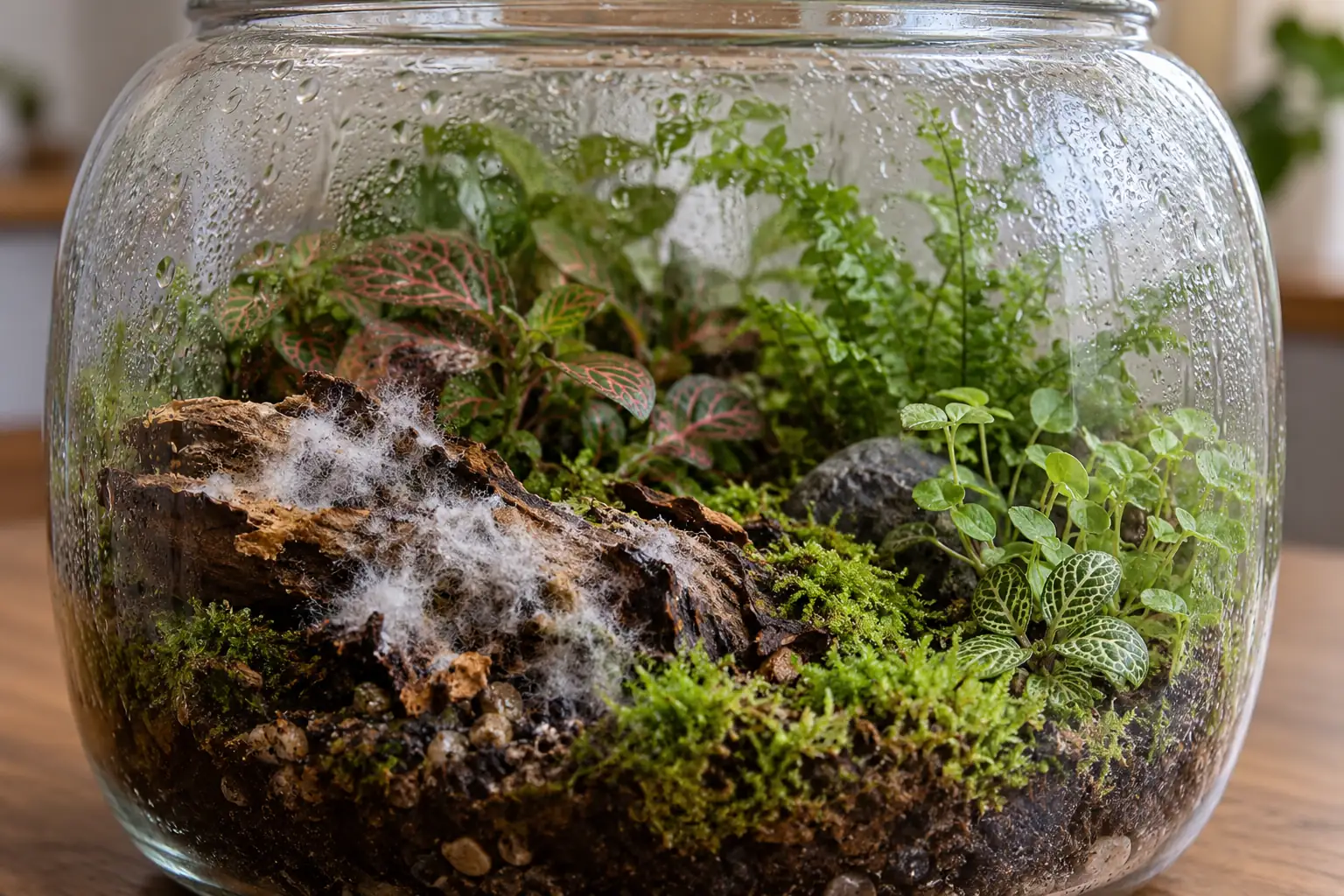
If you are sick of your moldy terrarium, it’s time to learn how to get rid of mold in a terrarium. Start by removing the visible mold and fixing the conditions that let it grow. Mold likes moisture, organic material, and still air, so a damp closed terrarium can give it exactly what it needs.
A small outbreak does not automatically mean the terrarium is ruined. In many cases, you can remove the affected material, let excess moisture escape, and keep the mold from returning without tearing the whole terrarium apart.
Why Does Mold Grow in a Terrarium?
Mold is a fungus, and fungi thrive where moisture stays high and organic material is available. A closed terrarium naturally has high humidity, so dead leaves, rotting roots, damp wood, or overly wet soil can feed mold.
Penn State Extension warns that a humid, enclosed terrarium can be a good breeding ground for pests and pathogens if they are introduced during planting. Iowa State University Extension also notes that wood breaks down quickly inside a terrarium and can introduce unwanted fungi.
Too much water makes the problem easier to start. Oklahoma State University Extension recommends keeping terrarium potting mix moist but not wet and avoiding foliage that stays excessively wet because bacteria and fungi can infect damp plant tissue.
Is Some Mold Normal in a New Terrarium?
Yes. A small amount of mold can appear in a new terrarium while the system is settling in, especially when fresh organic material, warm temperatures, and high humidity are all present.
Iowa State University Extension has described mold outbreaks as a common problem in new terrariums. That doesn’t mean you should ignore a growing patch, but a little white fuzz on a leaf, piece of wood, or soil surface isn’t automatically a reason to throw everything away.
The key question is whether the mold is temporary and easy to remove, or if it keeps returning because the terrarium stays too wet or contains actively decaying material.
If the growth looks like a green coating on the glass rather than fuzzy mold, it may be algae. See our guide to how to get rid of algae in a terrarium for the right cleanup steps.
How to Get Rid of Mold in a Terrarium
Work slowly and remove the mold without disturbing more of the terrarium than necessary.
1. Open the terrarium. If it is a closed container, remove or crack the lid so excess moisture can begin to escape.
2. Remove dead and decaying material first. Take out fallen leaves, soft stems, dead moss, and anything else that is breaking down.
3. Lift or wipe away visible surface mold. A tissue, cotton swab, small spoon, or long tweezers can help you remove a small patch without spreading it through the container.
4. Check wood and other natural decorations. If a piece is soft, decaying, or repeatedly covered with mold, remove it rather than cleaning it over and over.
5. Check the moss. Trim or lift out badly affected areas instead of soaking the whole terrarium with a treatment.
6. Let the terrarium air out. Wait until the excess condensation and surface moisture have decreased before closing it again.
7. Do not add more water until the soil actually needs it. A mold problem often gets worse when you water on a schedule instead of checking the terrarium first.
If the mold is growing directly on living plant tissue and the leaves or stems are becoming soft, brown, or rotten, treat it as a plant-health problem rather than a simple surface-cleaning job. Remove infected tissue and watch the plant closely.
Should You Remove Moldy Wood From a Terrarium?
Often, yes. Wood can look attractive in a terrarium, but it also contains organic material that fungi can break down. Iowa State Extension specifically advises against adding driftwood or similar wood products because they can decompose quickly and introduce fungi in the humid environment.
If a solid piece has only a tiny surface patch, you can remove the mold and watch it. If the wood feels soft, smells rotten, or grows mold again soon after cleaning, remove it.
Repeatedly scrubbing the same decoration usually means the material itself is feeding the problem. Replacing it with stone or another non-decaying decoration is often the simpler long-term fix.
How Do You Remove Mold From Terrarium Moss?
Moss needs moisture, so the goal is not to dry the entire terrarium until the moss is crispy. Instead, remove the worst affected patch and correct excess moisture around it.
Use tweezers or a small spoon to lift out moldy, brown, or decaying moss. If the mold is only sitting on the surface of healthy green moss, gently remove what you can without tearing up the whole mat. Leave the lid open long enough for excess condensation to clear and avoid adding water until the substrate needs it.
If the same section of moss keeps molding, check what is underneath it. Dead leaves, decomposing wood, soggy soil, or buried plant material may be feeding the fungus.
Why Does Terrarium Mold Keep Coming Back?
Mold usually returns because the original cause remains. Cleaning the white fuzz removes what you can see, but it doesn’t change a terrarium that stays too wet or is full of decaying material.
Common reasons mold keeps returning include too much water, constantly wet leaves, heavy condensation, dead plant debris, rotting wood, crowded plants, and poor air movement.
Fungal diseases such as gray mold thrive in wet or very humid conditions. University of Minnesota Extension recommends reducing excess moisture, improving air movement, and removing infected or decaying plant material as the main ways to control gray mold.
If a closed terrarium repeatedly fogs heavily and stays wet, open the lid long enough for some moisture to escape. Iowa State Extension recommends cracking the lid when excess condensation builds up.
How to Prevent Mold in a New Terrarium
You cannot guarantee that a terrarium will never grow mold, but you can make an outbreak much less likely.
1. Start with a clean container and clean tools.
2. Use healthy plants with no obvious disease or decay.
3. Remove yellow, dead, or damaged leaves before planting.
4. Use fresh potting mix rather than soil that has been sitting wet or exposed outdoors.
5. Keep the soil damp, not waterlogged.
6. Let wet foliage dry before sealing a newly planted closed terrarium.
7. Keep leaves from resting against wet glass when possible.
8. Remove fallen leaves and other dead plant material during regular maintenance.
9. Be cautious with untreated wood or other decorations that can rot.
10. Place the terrarium in bright indirect light instead of hot direct sun.
Penn State Extension emphasizes starting with a clean, disease-free environment. Missouri Extension also recommends healthy, disease-free plants and notes that leaves touching wet glass are more likely to decay.
Prevention is mostly about sanitation and moisture control. You don’t need to make a closed terrarium dry; you need to keep it from staying unnecessarily wet.
When Mold Is More Than a Cosmetic Problem
Not every fuzzy patch means a plant disease, but mold on soft, dying plant tissue deserves more attention than mold on a loose piece of bark.
Penn State Extension describes gray mold on houseplants as a disease that can cause brown, wet spots and dusty gray spores on infected tissue. It recommends good sanitation, avoiding overwatering and overcrowding, keeping leaves dry when possible, and removing infected plant parts.
If a plant is collapsing, developing soft brown tissue, or continuing to rot after you air out the terrarium, remove the affected plant and inspect its roots. Don’t keep a badly decayed plant in the container just because some leaves still look green.
A Quick Terrarium Mold Troubleshooting Check
- White fuzz on a dead leaf: remove the leaf and nearby debris.
- Mold on wood: clean it once; remove the wood if it is soft, or the mold keeps returning.
- Mold on moss: remove the worst patch and reduce excess moisture without drying the whole terrarium.
- Heavy condensation plus repeated mold: air out the terrarium and stop adding water until needed.
- Mold on soft or rotting plant tissue: remove infected material and check the plant for a larger disease or root problem.
- Mold returns after cleaning: look for the moisture or decaying material that is feeding it.
The Bottom Line
To get rid of mold in a terrarium, remove visible growth, remove dead or decaying material, and correct excess moisture. You can often handle a small outbreak without rebuilding the entire terrarium.
If mold keeps coming back, do not keep treating only the surface. Check for overwatering, wet foliage, rotting wood, dead leaves, or diseased plant tissue. Fixing the cause keeps mold from becoming a recurring problem.
For help keeping moisture under control, see How to Water a Terrarium.
Until next time.

Browse more Terrarium guides.
Sources and Further Reading
- Iowa State University Extension and Outreach – How to Create and Care for a Terrarium
- Penn State Extension – Creating a Closed Terrarium
- Oklahoma State University Extension – Terrariums
- University of Missouri Extension – Terrariums
- University of Minnesota Extension – Gray Mold in the Flower Garden
- Penn State Extension – Pest and Disease Problems of Indoor Plants
- Iowa State University Extension, Mills County – Plantwise: Terrariums and Mold