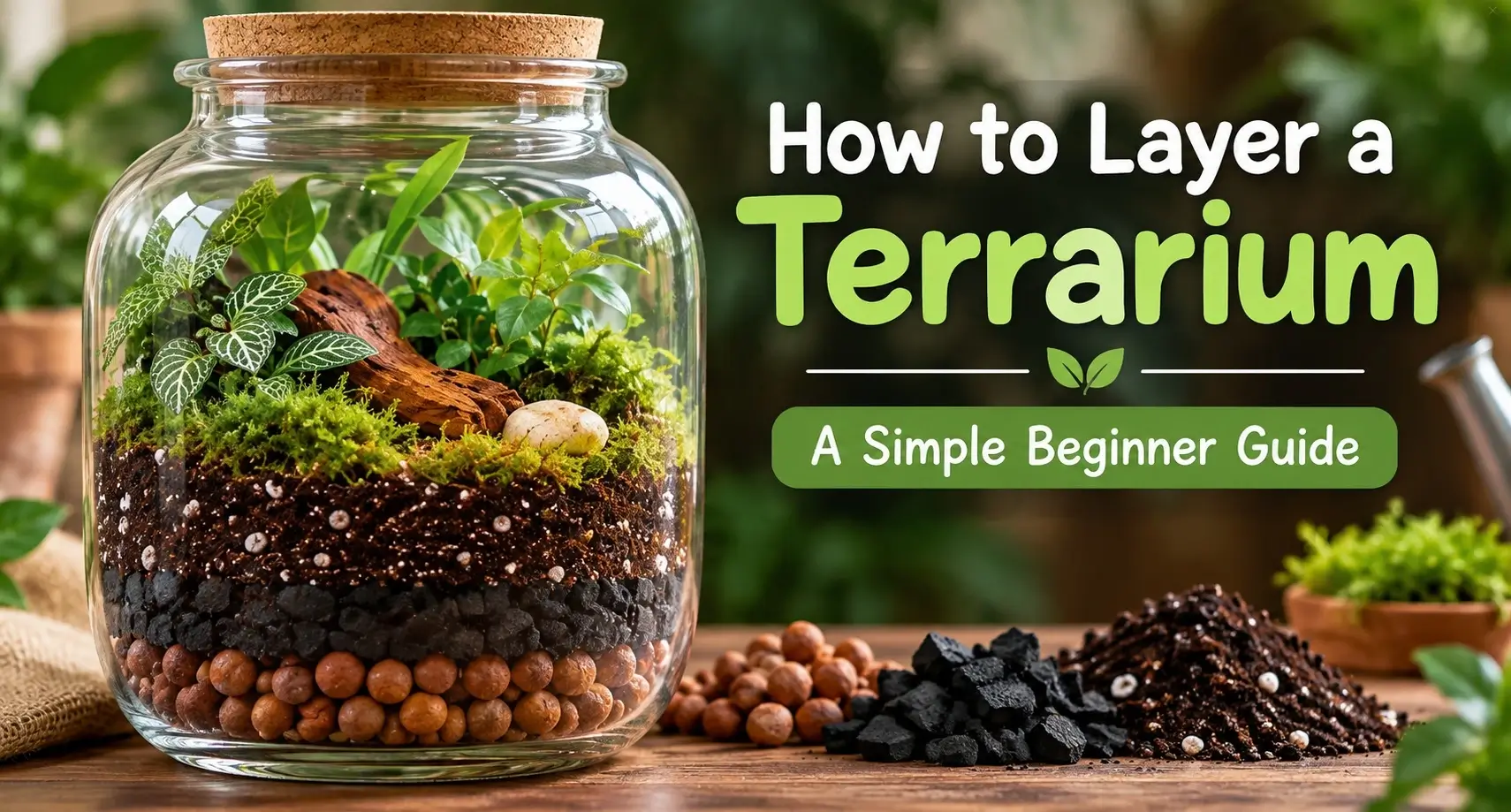
How to layer a terrarium depends on the container, the plants, and whether you want a simple planting or a visible multi-layer look. Every planted terrarium needs one layer: a suitable growing medium. Gravel or LECA, separator mesh, charcoal, moss, and decorative stones are optional or depend on the design you choose.
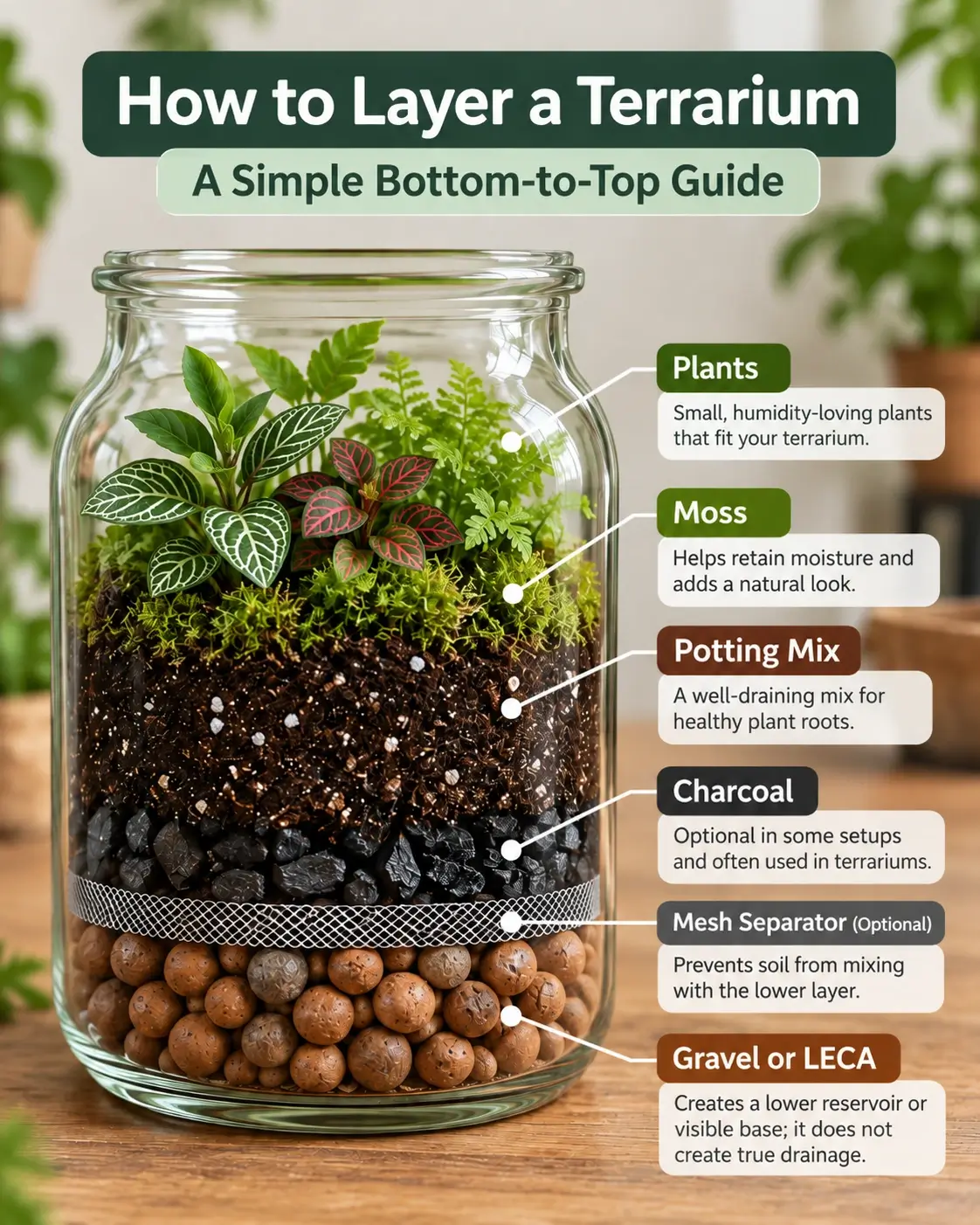
If you want a traditional layered build, a practical bottom-to-top order is: gravel or LECA, optional horticultural charcoal, optional separator mesh, potting mix, plants, and then optional moss or decorations. Just remember, a stone layer doesn’t work like a drainage hole. Too much water can still leave the growing mix soggy.
If you are still gathering supplies, start with what you need to make a terrarium before worrying about fancy layers.
Terrarium Layers at a Glance
| Layer | Do You Need It? | Main Purpose |
|---|---|---|
| Gravel or LECA | Optional | Creates a lower reservoir or visible base; it does not create true drainage. |
| Horticultural charcoal | Optional | Included in some terrarium setups, especially closed ones. |
| Mesh or fabric separator | Optional | Helps keep fine growing mix from settling into the lower layer. |
| Potting mix / growing medium | Yes | Supports the roots and holds air, water, and nutrients. |
| Plants | Yes | The living part of the terrarium. |
| Moss or decorative top dressing | Optional | Finishes the surface and can help create the look you want. |
What Order Should Terrarium Layers Go In?
No single layer stack works for every terrarium. If you want the classic layered appearance, this is a simple order to follow from the bottom upward:
- Washed gravel, pebbles, or LECA if you want a lower reservoir or decorative base.
- A thin layer of horticultural charcoal if you choose to use it.
- A permeable mesh or fabric separator if you want to keep the growing mix out of the lower material.
- Fresh growing mix suited to the plants.
- The plants themselves.
- Optional moss, leaf litter, stones, or other surface decorations.
University guides use several versions of this order. For example, the University of Florida places gravel first, then charcoal, then a synthetic separator before the growing medium. The Royal Horticultural Society uses an even simpler setup: a lower layer of washed gravel or expanded clay, then enough potting compost for the plant roots.
That difference matters because terrarium layers are not a magic formula. The growing medium, plant choice, and amount of water matter more than copying a decorative stack exactly.
Do You Need a Drainage Layer in a Terrarium?
Not always.
This is one of the few terrarium topics where reputable horticulture sources give different advice. Iowa State University, the University of Florida, and the Royal Horticultural Society all describe a lower layer of gravel or similar material. Oklahoma State University takes a different position and warns that a coarse layer under fine potting mix can actually slow the movement of water out of the growing medium.
The safest takeaway is simple: do not depend on gravel to protect a terrarium from overwatering. A lower rock or LECA layer can give small amounts of excess water a place to collect and can make the terrarium look neatly layered, but it does not turn a glass container into a pot with a real drain hole.
That also matches how a terrarium works: water stays inside the system until plants use it, it evaporates, or it is removed. A lower layer changes where some water collects, but it does not remove water from the container. For a deeper look at the moisture cycle, see how a terrarium works.
How Deep Should a Terrarium Drainage Layer Be?
No universal depth fits every terrarium.
University recommendations vary. The University of Florida suggests roughly 1/2 inch to 1 1/2 inches, depending on the container’s size and shape. Iowa State University uses about 2 inches in its general terrarium instructions. That range reminds you that the container and the plants should set the proportions, not a fixed number.
If you use a lower layer, keep these points in mind:
- A small jar should not lose most of its planting space to rocks.
- The growing mix still needs enough depth for the plant root balls.
- A deeper lower layer does not make heavy watering safe.
- In a shallow container, you may decide to skip the lower layer altogether.
When space is limited, give the roots enough growing medium first. The Royal Horticultural Society recommends adding enough potting compost to accommodate the root balls of the plants rather than using one fixed soil depth for every terrarium.
Can You Use Mesh Between Terrarium Soil and Gravel?
Yes. A permeable separator can help keep fine potting mix from working its way down into gravel or LECA.
The University of Florida recommends a piece of synthetic fabric above the lower layer for this purpose. The key word is permeable. Water should still be able to move through it.
A separator mainly keeps the layers distinct. It doesn’t improve drainage on its own, and it doesn’t make the terrarium safe to overwater. Avoid using a solid plastic sheet or another material that traps water above it.
Can You Use Clay Balls for Terrarium Drainage?
Yes. Expanded clay balls, often sold as LECA or Hydroleca, can be used as the lower layer in a terrarium. The Royal Horticultural Society lists expanded clay as an alternative to washed gravel.
LECA is lighter than stone, which can be useful in a larger glass container. It also gives the base a clean, even look. If you use it, rinse off loose dust before adding it to the terrarium.
The same rule still applies: clay balls are a lower reservoir or structural layer, not a substitute for a drainage hole or careful watering.
Which Soil Layers Does a Closed Terrarium Need?
A closed terrarium does not need several different soil layers. It needs one suitable growing medium with enough depth to support the roots.
Oklahoma State University recommends a clean commercial potting medium rather than ordinary garden soil. Garden soil can be too heavy for a container and may also bring in weed seeds, insects, or disease organisms.
For a basic closed terrarium, choose a fresh container mix that suits small tropical or humidity-loving plants. Add enough for the roots, then plant into that one growing layer. You do not need to build separate layers of sand, soil, peat, and compost just because a diagram online shows them.
If you are building the whole setup from scratch, our closed terrarium guide walks through the rest of the process.
Do Terrariums Need Drainage Holes?
Closed terrariums usually do not have drainage holes. Their whole design depends on keeping much of the moisture inside the container, where it can cycle through the growing medium, plants, air, and glass.
Open terrariums may or may not have drainage holes. If you are growing plants that strongly prefer dry conditions, such as many succulents, a real drainage hole makes watering more forgiving because excess water can drain out.
If your open terrarium has no hole, water with extra care. A gravel layer at the bottom does not replace the hole. Our open terrarium guide explains the difference in moisture handling in more detail.
A Simple Layering Plan for Beginners
If all the different layer recipes are starting to look like a geology class, keep your first build simple.
Option 1: The simplest planted terrarium
- Add fresh growing mix that suits the plants.
- Plant a few compatible plants.
- Add moss or decorations only if you want them.
- Add water carefully instead of soaking the container.
Option 2: The traditional layered look
- Add washed gravel or LECA.
- Add a thin charcoal layer if you want to use charcoal.
- Add permeable mesh to keep the growing mix above the lower layer.
- Add enough growing mix for the roots.
- Plant the terrarium.
- Finish with optional moss, stones, or other top dressing.
Both approaches can work. The key is to use a suitable growing medium, give the roots enough space, match the plants to the terrarium type, and avoid adding more water than the container can handle.
Common Terrarium Layering Mistakes
- Treating gravel as permission to overwater. It is not.
- Using so much gravel that there is too little growing medium for the roots.
- Using heavy garden soil instead of a clean container growing mix.
- Using a solid separator that blocks water instead of a permeable one.
- Packing the growing mix so tightly that roots have very little air space.
- Copying a layer recipe without considering whether the plants prefer humid or dry conditions.
The Bottom Line
Layering a terrarium is simpler than many diagrams make it look. The growing medium is essential. Gravel or LECA, charcoal, mesh, moss, and decorative stones are optional parts that can be useful in the right setup.
If you use a layered base, think of it as a way to organize the terrarium and create a place for some excess water to collect, not as a replacement for proper drainage. Give the roots enough good growing mix, use a permeable separator if you want clean layers, and add water conservatively.
That approach is less complicated, more flexible, and much harder to get wrong.
Until next time.

Sources and Further Reading
- Royal Horticultural Society – Terrariums and Bottle Gardens
- Oklahoma State University Extension – Terrariums
- Iowa State University Extension – How to Create and Care for a Terrarium
- University of Florida IFAS Extension – Designing and Building a Terrarium
- University of Illinois Extension – Container Drainage Options